Showing posts with label early signs of alzheimer's. Show all posts

Early-Alzheimer's patients flunk financial study


There is no doubt that if we had payed closer attention to my mother's finances she would have been diagnosed sooner. Early diagnosis is a critical variable in slowing the progression of Alzheimer's.

People who are in the early stages of Alzheimer's disease show rapid declines in their ability to manage their financial affairs, a study reports this month.

Early-Alzheimer's patients flunk financial study

By Kathleen Fackelmann, USA TODAY

People who are in the early stages of Alzheimer's disease show rapid declines in their ability to manage their financial affairs, a study reports this month.

An estimated 5 million people in the USA have Alzheimer's, a degenerative brain disease that ultimately causes severe confusion and memory loss. In the early stages of the disease, they symptoms are mild. Yet the new study suggests that even at this stage, patients may have trouble with basic money matters, such as paying bills or counting change.

The findings suggest that patients, even those who have mild symptoms such as some foggy thinking, should act right away to get their finances in order.

"The longer you wait, the more impaired you become," says Stephen McConnell, senior vice president of the Alzheimer's Association. The study is one of the first to document the steep decline in patients' ability to handle money matters, he says.

Daniel Marson, director of the University of Alabama-Birmingham's Alzheimer's Disease Center, and his team recruited 55 people who had early-stage Alzheimer's and compared them with 63 healthy seniors. The team gave the recruits a series of basic financial tasks such as writing out a check or reading a bank statement.

They found that compared with healthy seniors, patients with mild symptoms of the disease scored poorly on 16 out of 18 such tasks right at the study's start. The team tested the seniors after a year and found that Alzheimer's patients showed a substantial decline in overall financial capacity and made lots of mistakes when they performed specific tasks, including filling out checks and preparing a bill to go out in the mail.

Alzheimer's patients also were increasingly taken in by fraud schemes, Marson says. Most of the healthy seniors had no trouble identifying a letter outlining a scam as suspicious. Many of the Alzheimer's patients were duped or swayed by the letter, Marson says.

He says fraud schemes by phone or mail often target the elderly, and older people with confusion are a prime target.

"Patients lose the ability to size up the situation," Marson says. "And before you know it, they've made a sizable donation." The research is published in the March issue of the American Journal of Geriatric Psychiatry.

Early-stage Alzheimer's patients still have the ability to make decisions about how they want their affairs handled, McConnell says. They should visit a lawyer while they are healthy enough to consider setting up some protections such as a durable power of attorney, he says. A durable power of attorney allows a designated family member to step in and make decisions when the disease has worsened.


Mild Alzheimer's Patients Show Rapid Decline In Financial Skills Over One Year


I was late in discovering my mother was suffering from Alzheimer's dementia. After my father passed away my mother took over the the bill paying. She did this without a problem for over ten years. I finally discovered that there were all kinds of problems. Looking back I realized that this is one of the early signs of dementia. My advice to all is to allow the elderly to pay their own bills and to monitor these payments. If the pattern changes this could be an early tip-off that things are changing and that you need to rule out or rule in the onset of Alzheimer's disease. This is one of the early signs of Alzheimer's and dementia.

Mild Alzheimer's Patients Show Rapid Decline In Financial Skills Over One Year

New research from UAB (University of Alabama at Birmingham) shows that patients with mild Alzheimer's disease (AD) have a dramatic decline in their ability to make financial decisions over a one year period. The findings, published Feb. 8 online in the American Journal of Geriatric Psychiatry, have strong implications for caregivers and health care providers in the areas of estate planning and fraud prevention.

The UAB team compared 55 patients with mild AD against 63 healthy older adults and followed them for one year. At the beginning of the trial, the mild AD group already showed a 20 percent decline in overall financial ability compared to the control group. By the end of the year, the AD group had dropped another 10 percent.

"After just one year, the mild AD group had dropped to 70 percent of the financial capacity demonstrated by the healthy older adult group, a significant decline," said Daniel Marson, J.D., Ph.D., director of the UAB Alzheimer's Disease Center in the Department of Neurology and the study's lead author.

Patients were assessed on a variety of financial skills, including basic monetary skills, checkbook management, bill payment and understanding a bank statement. Tasks varied from simple ones such as identifying specific coins and currency to complex ones such as preparing bills, checks and envelopes for mailing.

Assessments were done using the Financial Capacity Instrument, (FCI-9), an instrument developed by Marson's group. The FCI-9 measures 18 different financial tasks within nine domains and has two overall scores.

The AD group showed substantial declines in overall financial capacity, on eight of the nine financial domains and on 12 of the 18 financial tasks. Of particular concern was decline in the ability to recognize telephone or mail fraud.

"Elder fraud is a serious problem and our findings suggest that even patients with mild Alzheimer's are at significantly increased risk for becoming victims of fraud," said Marson.

Overall the study found that impairment in financial skills occurs early in AD and progresses relatively rapidly over time, and includes declines in basic judgment and monetary calculation skills. The findings underscore the importance, at the time of diagnosis, of patients with mild AD and their families promptly pursuing financial planning and transfer of financial responsibilities, Marson said.

Proactive steps by families include finalizing trust and estate arrangements, delegating financial decision-making powers, planning for eventual financial incapacity, and providing increased supervision of existing financial activities.

This research was supported by grants from the National Institute on Aging (NIA) and the National Institute of Mental Health (NIMH), part of the National Institutes of Health (NIH).

University of Alabama at Birmingham
701 20th St. S., AB 1320
Birmingham, AL 35294-0113
United States
http://www.uab.edu

Article URL: http://www.medicalnewstoday.com/articles/96795.php


Alzheimer's Drug Successful Test CTS-21166


clipped from www.omrf.org
CoMentis, a California/Oklahoma City-based pharmaceutical company, is developing a beta-secretase inhibitor, CTS-21166, discovered by Dr. Tang and Dr. Arun Ghosh of Purdue University. Unlike the existing Alzheimer’s drugs that treat only the symptoms, CTS-21166 inhibits, or turns off, the mechanism believed to lead to disease progression. The Phase I clinical trial results showed CTS-21166 to be safe and well tolerated in humans at various dose levels. Following the administration of a single dose,
CTS-21166 reduced the levels of plasma beta amyloid, a potential cause of progression of the disease, by as much as 60 percent.
“CTS-21166 represents an entirely new approach to the treatment of Alzheimer’s disease by inhibiting beta-secretase, an enzyme critical in the production of potentially toxic amyloid beta,” said Henry Hsu, M.D., CoMentis Chief Medical Officer. “It has the potential to become the first-in-class disease-modifying therapeutic agent.”

blog it


Scientists have moved one step closer to developing a new type of drug to treat Alzheimer’s disease. An experimental drug based on discoveries made by Dr. Jordan Tang at the Oklahoma Medical Research Foundation has successfully completed the first phase of testing in human subjects.

CoMentis, a California/Oklahoma City-based pharmaceutical company, is developing a beta-secretase inhibitor, CTS-21166, discovered by Dr. Tang and Dr. Arun Ghosh of Purdue University. Unlike the existing Alzheimer’s drugs that treat only the symptoms, CTS-21166 inhibits, or turns off, the mechanism believed to lead to disease progression. The Phase I clinical trial results showed CTS-21166 to be safe and well tolerated in humans at various dose levels. Following the administration of a single dose, CTS-21166 reduced the levels of plasma beta amyloid, a potential cause of progression of the disease, by as much as 60 percent.

“CTS-21166 represents an entirely new approach to the treatment of Alzheimer’s disease by inhibiting beta-secretase, an enzyme critical in the production of potentially toxic amyloid beta,” said Henry Hsu, M.D., CoMentis Chief Medical Officer. “It has the potential to become the first-in-class disease-modifying therapeutic agent.”

Beta secretase, the enzyme thought responsible for causing Alzheimer’s, was first identified in 2000 by Tang and his colleagues at OMRF. They then developed an inhibitor to stop the enzyme’s action in a laboratory setting. Since that time, Tang and collaborator Arun Ghosh, Ph.D., of Purdue University have worked with CoMentis scientists to design and develop new inhibitors safe for use in humans.

“This is a significant milestone and an unquestionable success,” Tang said. “We are stepping onto uncharted paths in Alzheimer’s treatment and seeing wonderful results so far. Hopefully, this drug will make a real difference and help stop this disease one day.”

While the clinical trials continue, Tang and his colleagues will work on the next generation of drugs to combat Alzheimer’s. “This is not a one-shot deal. We will keep working to build an arsenal to fight this deadly disease.”

During the first phase of testing, the drug was administered by injections, Tang said. Another clinical study, using an oral version of CTS-21166 will likely begin in a few months, followed by a phase II study later this year, he said.

“As far as Phase I testing goes, we could not have expected better results for a new CNS (central nervous system) drug,” he said. “It not only proved the drug candidate is safe, it gave us a whole lot of information on efficacy.”

Tang said the significance of this drug is that it is designed to treat the disease itself rather than treating the symptoms, like all other available Alzheimer’s drugs.

“It would be great if people could take one pill a day and push the onset of the disease back indefinitely,” he said. “This is another milestone toward that goal.”

About Alzheimer’s Disease:
Alzheimer’s disease is a neurological disorder characterized by slow, progressive memory loss due to the gradual death of brain cells. According to the Alzheimer’s Association, the disease affects more than 4.5 million Americans, including 62,000 Oklahomans and nearly half the U.S. population over the age of 85.

About CoMentis:
CoMentis, Inc. (comentis.com) has its headquarters in South San Francisco, with research operations in both South San Francisco and Oklahoma City. The company is engaged in the discovery and development of small-molecule drugs to treat Alzheimer’s disease, age-related macular degeneration (AMD) and cognitive disorders.

About OMRF:
OMRF (omrf.org) is an independent, nonprofit biomedical research institute dedicated to understanding and developing more effective treatments for human disease. Its scientists focus on such critical research areas as Alzheimer’s disease, cancer, lupus and cardiovascular disease.


A New Tool for Diagnosing Alzheimer's Magnetoencephalography (MEG)


This development has wonderful implications for diagnosing Alzheimer's; it has far reaching implications for those predisposed by genetics to Alzheimer's disease.

You will be hearing this word quite a bit in the coming months, Magnetoencephalography (MEG). If you read our previous post you will understand why this is likely. Researchers from the University of Minnesota Medical School and Brain Sciences Center at the Minneapolis VA Medical Center recently identified a way to diagnose Alzheimer's and other brain diseases. I am often asked what I am doing for myself now that my mother has been diagnosed with Alzheimer's. The answer to this question is quite long and detailed. I will answers this question when I can on my companion blog, I am an Alzheimer’s CareGiver. For now, I will be investigating the use and potential for Magnetoencephalography as a tool in diagnosing Alzheimer’s disease. As I learn more I will be posting that information on this blog.

For now I can tell you this, the procedure is very expensive and is out of reach financially for the majority of us who are genetically predisposed to Alzheimer’s. Perhaps in the future there will good medical reasons for insurance companies to catch the disease early and treat it. When this occurs the test will become more readily available for those with insurance and likely cheaper for those without that benefit. We can only hope and pay attention to developments

Source Brain Sciences Center, University of Minnesota

Applications

MEG provides scientists a vital neuroimaging tool to gain critical perspectives into the basic mechanisms of the cognitive processes of the healthy, functioning brain in the same lightning speed at which the brain itself operates.

MEG studies also allow researchers valuable insights into the dysfunctional brain with respect to neurological disorders and diseases such as: schizophrenia, stroke, mental retardation, dyslexia and Alzheimer’s disease through measuring these changes in the brain’s electro-magnetic fields.


Magnetoencephalography (MEG) is a rare, complex neuroimaging technique that allows scientists a unique view of the dynamic, interactive brain. There are only a few research centers in the world that have the expertise and capital to incorporate this advanced level of technology into their brain studies.

The uniquely powerful MEG machine at the Brain Science Center uses a non-invasive, whole-head, 248 channel, super-conducting-quantum-interference-device (SQUID) to measure small magnetic signals reflecting changes in the electrical signals in the human brain. The incorporation of liquid helium creates the incredibly-cold conditions (4.2 kelvin) necessary for the MEG’s SQUIDs to be able to measure fields that are literally billions of times weaker than the background magnetic field of the earth.

Investigators at the Center use the MEG to measure these magnetic changes in the active, functioning brain in the speed of milliseconds. Used in conjunction with magnetic resonance imaging (MRI), to relate the MEG sources to brain structures, and functional magnetic resonance imaging (fMRI), for optimal spatial resolution, researchers can now localize brain activity and measure it in the same temporal dimension as the functioning brain itself. This allows investigators to measure, in real-time, the integration and activity of neuronal populations while either working on a task, or at rest. The brains of healthy subjects and those suffering from dysfunction or disease are imaged and analyzed in these MEG studies.

History

This ever-evolving technology began as a single-channel system in the 1970s. Since then, MEG technology has been constantly updated and refined into its current state-of-the-art status. The MEG instrument at the Brain Sciences Center, is one of the few of its caliber in existence. Its 248 SQUID sensors make this imaging machine one of the most powerful and technologically advanced in the world.

What is the Brain Sciences Center?


dysfunctional brain, early signs of alzheimer's, genetically predisposed, I am an Alzheimer’s CareGiver, magnetoencephalography, meg, neuroimaging, predisposed by genetics to Alzheimer's

60 second test could help early diagnosis of Alzheimer's like Dementia


Researchers from the University of Minnesota Medical School and Brain Sciences Center at the Minneapolis VA Medical Center have identified a way to diagnose Alzheimer's and other brain diseases. Using magnetoencephalography (MEG) and various mathematic algorithms, the researchers were able to identify and classify the brain disease in 142 research subjects that had been previously diagnosed. Magnetoencephalography is a non-invasive measurement of magnetic fields in the brain and the tests last between 45-60 seconds.

"This elegantly simple test allows us to glimpse into the brain as it is working," Apostolos P. Georgopoulos said. "We were able to classify, with 100 percent accuracy, the various disease groups represented in the group of research subjects."

This study should be of particular interest to anyone that is genetically predisposed to Alzherimer's and other forms of Dementia.

Currently, brain diseases are diagnosed with behavioral exams, psychiatric interviews, and neuropsychological testing.

Read more about this study being conducted at the University of Minnesota Medical School and Brain Sciences Center on the next page.


Original Source U of M Researchers Discover Noninvasive Diagnostic Tool for Brain Diseases


Additional Source Institute of Physics

Until recently physicians have had to rely on time-consuming and uncertain behavioural examinations to diagnose the onset of brain diseases such as multiple sclerosis, Alzheimer's and schizophrenia.

Research published next week in the Institute of Physics' Journal of Neural Engineering suggests that we could soon be able to diagnose the onset of many brain diseases by analysing the tiny magnetic fields produced by neuron activity in the brain.

This is a significant breakthrough for neurologists and psychiatrists as it could present a fast and simple screening test for brain diseases, while also helping differentiate between different brain diseases that have similar symptoms.

A team of investigators from the University of Minnesota Medical School in Minneapolis, US, led by Professor Apostolos P. Georgopoulos, has been analysing the magnetic charges released when neuronal populations in our brains 'couple'. By comparing the patterns of tiny magnetic charges in healthy brains to those afflicted with common diseases such as Alzheimer's, the team has been able to identify the patterns commonly associated with these debilitating diseases.

A process called magnetoencephalography (MEG), a non-invasive measurement of magnetic fields in the brain, has been used to examine a total of 142 volunteers during tests which last between 45-60 seconds. The team first studied 52 volunteers to find patterns of neural activity that could identify all the different illnesses.

They then tested a further 46 patients to see whether the patterns found from the first group could accurately diagnose disease within a second group. Here, many of the predictors found from the first set of participants also correctly diagnosed more than 90% of subjects in the second sample.

Professor Georgopoulos said, "We want to continue and acquire data from a large number of subjects - patients and matched controls. The throughput of this MEG test is large so we can continue a high rate of testing and we hope that clinical applications can become a reality in a year or two."

Diagnosing illnesses like Alzheimer's has always been very difficult, particularly in the early stages. Physicians are forced to rely on conversations with patients, memory tests, physical examinations and, occasionally, brain scans. It is sometimes not until post-mortem or after a biopsy that cause of illness can be confirmed.


Zen and the Art of Coping With Alzheimer’s


During the YouTube forum with the Democratic presidential candidates in July, the first question about health care came from two middle-age brothers in Iowa, who faced the camera with their elderly mother. Not everybody with Alzheimer’s disease has two loving sons to take care of them, they said, adding that a boom in dementia is expected in the next few decades.

“What are you prepared to do to fight this disease now?” they asked.

The politicians mouthed generalities about health care, larded with poignant anecdotes. None of them answered the question about Alzheimer’s.

Read the entire article at the The New York Times.

Sniff Test May Signal Disorders’ Early Stages


Early signs of Alzheimer's (Dementia)


I ran across this description of the "early signs of Alzheimer's" on the Milton S. Hershey Medical Center (Penn State) some time ago. I felt it might be helpful and decided to post it.


Source Milton S. Hershey Medical Center

Alzheimer’s Disease


What is it?

Alzheimer's disease is the most common cause of a condition called dementia. Dementia is a general decline in mental ability, such as memory, language skills, judgment, and concentration. Alzheimer’s is a progressive disease, which means symptoms occur gradually and become worse over time. It is named for the German doctor who first described it, Alois Alzheimer.

Who gets it?


Alzheimer’s disease affects most commonly affects those over the age of 65, although it has been diagnosed in people in their 40s and 50s.

What causes it?


The degeneration of parts of the brain, which destroys brain cells, causes the symptoms of Alzheimer’s. However, at this time researchers are not sure what causes this degeneration. Those with a family history of Alzheimer’s are more likely to develop the disease as they age, so there is a gene abnormality that causes the disease in some people. Researchers are looking for links between Alzheimer’s disease and the environment, lifestyle, nutrition, and viruses.

What are the symptoms?


Alzheimer’s usually progresses in three stages, with each lasting anywhere from one to several years. The first symptom of Alzheimer’s disease is usually mild forgetfulness. Someone in the early stages may find him or herself unable to find the right word, recall where something was placed, or recall someone’s name. It may be difficult to concentrate. At this point, symptoms are so general that they do not signal a serious problem or have a great impact on day-to-day functioning. As the disease progresses to the second stage, the forgetfulness becomes worse, making it difficult to function at work, remember directions, or to even make it through the day without difficulty. The person may be restless and unable to sleep at night. His or her personality may change considerably, with increasing anxiety and decreasing emotions. By the late stages of Alzheimer’s, patients suffer from extreme confusion and memory loss. They are unable to recall the names of close friends and family or recent events, and cannot function socially or perform basic daily personal care. Late-stage Alzheimer’s patients may have hallucinations and delusions.

How is it diagnosed?


Alzheimer’s disease is diagnosed by taking a complete medical history and performing a thorough physical examination. Alzheimer’s is generally suspected when there is a gradual deterioration in mental ability. The doctor will perform tests, such as blood tests and brain scans, to rule out other possible causes of the symptoms. The doctor will also ask the patient a series of questions to test his or her mental status. One type of test of mental status is called neuropsychological testing, which is a standardized test of memory, concentration, and visual-spatial skills. Because a definite diagnosis can only be made by performing an autopsy after death, patients are diagnosed with “probable” Alzheimer’s. An autopsy of brain tissue, however, will show areas of abnormal tissue, called plaques, made up of abnormal proteins; a loss of nerve cells; and areas of tangles in the nerve cells that remain in patient’s with Alzheimer’s disease.

What is the treatment?


At this time, there is no cure for Alzheimer’s disease. Treatment focuses on maintaining the best possible quality of life for the patient by providing a supportive environment. Memory aids, such as calendars and other daily reminders of time and place, can help the patient feel more secure and reduce confusion. There are some medications that, when used in the early stages of this disease, can slow memory loss in some patients for a limited amount of time. However, these drugs are used with caution because of potential side effects. Other drugs may be prescribed to treat anxiety, sleeplessness, depression, and hallucinations, as necessary. In the early stages of Alzheimer’s, it is important to help the patient maintain as much independence as possible. As the disease progresses, it may be necessary to seek the help of a home healthcare aid, an adult daycare, or nursing home. While there is currently no treatment to prevent or stop the progression of Alzheimer’s, researchers are continuing to study this disease and test new drugs. There is a possibility that certain types of nonsteroidal anti-inflammatory drugs (NSAIDs) may slow the progression of Alzheimer’s.

Self-care tips


A diagnosis of probable Alzheimer’s is devastating for someone who has been accustomed to living an independent life. It is important to provide the patient with emotional and physical support as he or she adjusts to living with this disease. Keeping the daily routine consistent and as stress free as possible is helpful. Because depression is so common in the early stages of Alzheimer’s, you should be aware of the signs of depression and seek help for the patient as soon as possible. Caring for someone with Alzheimer’s can be demanding and discouraging, especially when the loved one does not remember who you are. Your doctor or local social services agency can direct you to support services to help make this time a little easier. Also seek legal advice so it is clear who has the power to make medical and financial decisions once your loved one is no longer able to do this for him or herself. If you have a family history of Alzheimer’s disease, see your doctor for regular checkups. An early diagnosis is important, especially as the medical community learns more about this disease and its treatment. While there is no way to prevent this disease, you can lower your risk and protect yourself from many illnesses by following a healthy diet that is high in fiber and antioxidants and low in saturated fat, and participating in regular physical exercise. Performing activities that stimulate your brain on a regular basis, such as crossword puzzles, word searches, or memory games, may also help maintain mental ability longer.


--------------------------------------------------------------------------------

This information has been designed as a comprehensive and quick reference guide written by our health care reviewers. The health information written by our authors is intended to be a supplement to the care provided by your physician. It is not intended nor implied to be a substitute for professional medical advice.


What If It's Not Alzheimer's: A Caregiver's Guide to Dementia

Alzheimer's, Validation Therapy and the CareGiver


I ran across this article while "fishing" on the Internet. This tried-and-true technique can be used when you are at "wits" end when dealing with difficult behavior. The article contains examples that should help you develop your own frame of reference, techniques when dealing with difficutl situations on a daily basis.

The article should be particularly useful in helping you understand that the often bizarre behaviors evidenced by your Alzheimer's loved one are not uncommon and can be dealt with effectively. This article is worthwhile reading and is worth "salting away" for future reference.


Nursing Homes, June, 2000 by Mark Warner

DESIGNS for Validation Therapy

Mark Warner

This tried-and-true technique can be supported in the Alzheimer's environment

As each member of the group sat in the circle hoping the balloon would gently drift their way, Roxanne burst from her chair in a fit of rage, shouting "There'll be no ball-playing in my house!" Furious at the insolence of the players who ignored her commands, Roxanne forcefully attacked a staff member, who tried to comfort her by explaining that she was not in her house, but merely with her friends playing a game. Roxanne didn't buy that and swung wildly, hitting the staff member squarely in the chest.

Fearing that I, too, might fall victim to the same fate, I cautiously approached Roxanne.

I put my arm around her shoulder and supported her in her cause that there should be no ball-playing in her house. "This is terrible," I said. "You're right, they should not be throwing that ball in your house, should they?"

"No, they shouldn't," bellowed Roxanne, showing only the slightest relief that someone saw her point of view.

"But you know, Roxanne, the only way they will stop throwing that ball is if we write down the rules for them. I think it's the only way they'll listen." Roxanne was buying this approach, so I suggested, "Let's go into that room over there and write down all the rules for them, okay?" Much to my relief, Roxanne agreed, and hand-in-hand we went into the room to write down the "rules."

"Okay," I began, "Rule Number One is 'No ball-playing in the house,' right?"

"That's right," agreed Roxanne.

"So what will Rule Number Two be," I asked, and then offered, "How about, 'No running in the house'?"

"That's right," said Roxanne, "my grandchildren are not allowed to run in my house."

"Roxanne, you've got grandchildren," I said, raising the tone of my voice with delight.

"Oh, yes, my little gran'boy is six years old, and he is as smart as they come." Roxanne was on a roll now, and the upset caused earlier by the balloon toss in the next room might as well have been miles away. Fifteen minutes later, when the game was over, Roxanne and I emerged from the room, both of us just as happy as we could be, the "rules" left on the table and the incident long forgotten.

The technique used here is called Validation Therapy. It assumes that no matter what illusion the person with Alzheimer's disease (AD) is living, she is right, and nothing you can say or do will convince her otherwise. Naomi Feil is the acknowledged expert on validation therapy and wrote the book The Validation Breakthrough. The basic concept is that you have to buy into the resident's illusion and convincingly play along with it, there by validating it. Eventually you'll see opportunities to mold the tale--and the resident's behavior--into something that is acceptable and no longer upsetting.

"What has this got to do with design," you ask? Everything, in fact. Understanding Alzheimer's disease and the many creative ways to deal with it are as much a challenge of designing an environment as of caregiving within it.

Angie is always complaining about the stranger in the bathroom. She won't use the toilet while "the other lady" is in there. She says that the bathroom is occupied, not realizing it is her own reflection that she sees. Do you explain that she is seeing herself in a mirror?

No. You go along with her. How about, "I'm sorry, Angie, let me see what's taking that lady so long." You go into the bathroom and somehow cover the mirror. One family confronted by this situation told their mother that the mirror was dirty and needed to be cleaned. They sprayed it with a powdered deodorant, creating a haze that obscured any reflection. "Mom, she's out of there now," her daughter said. "I wonder what took her so long. Let me know if you need anything. I'll be right here waiting for you."

Caregiver 1: "Deborah won't eat anything. She just sits at the table and stares at the food. She loves gardening, though; we spend hours every day weeding and pruning the vegetables in our garden."

A golden opportunity awaits us here. Figure it out. Deborah loves gardening, but won't eat.

"So we tried something a little different. Though the tomatoes were days from ripening, I went to the grocery store and picked out some beautiful red ones. Instead of putting them on the table in front of her, I pretended to come in from the garden, tomatoes in hand. As Deborah Looked at the tomatoes, I told her, 'They came from our garden and don't they Look delicious?"'

Granted, such ploys are not always so successful, but many are. Sharing the bounty of the garden, enjoying the fruits of your labor that you grew together, can somehow trigger pleasant, guiding thoughts and behaviors when all else fails. Perhaps it stirs up memories from long ago, or maybe it's just the thrill of eating your own garden vegetables. Regardless, it adds a new dimension to life that might very well conquer the ravages of the disease and perhaps bring new purpose to those waist-high gardens many facilities are installing these days.

Taking validation to the next step often involves anticipating the problem and creating the illusion. Validation, also referred to as deceptive therapy, white lies and fiblets, means creating a story--in the best interest of the person who is "confused."

"Dad, who's president? Do you remember his name?"

"Of course l do, it's Roosevelt!"

If your family member believes it is the 1930s, so be it. As he regresses in time, so do his memories of values, experiences and people. What was important then becomes important now!

Given residents' belief that they are living when Roosevelt was president, what would the world have been like back then? What would the good experiences and environmental features have been? How can we recreate the familiar feelings of that period in a convincing and subtle way?

For example, those were the days when they hung the clothes on a line in the back yard. Isn't that the kind of good and secure feeling we would want to recreate--possibly by merely providing a clothesline? Others might be enjoying the time when they were raising their families. What better way to indulge them than by allowing them to once again care for their spouse or children by hanging "their" clothes out to dry?

Or, perhaps they have less comforting memories.

Caregiver 2: "Mom collects everything--rubber bands, paper clips paper...everything! And she stores them everywhere. You can hardly walk in her room, there is so much stuff in there!"

Perhaps Mom is reliving times when the country was at war, when every little scrap was valuable in the war effort, or the Great Depression, when times were so tough that you had to keep everything, when nothing that might be useful was thrown out. Environmental validation then might mean providing easy-to-see drawers, trunks or cabinets to store these important items.

How were evenings spent in the good ol' days (before TV, let's say)? Many families spent hours sitting on the porch, watching people go by, talking to neighbors, etc. Why not create a porch, complete with rockers and swing gliders? Locate it carefully and safely, but within view of interesting activities (maybe a playground where children play). Make sure it is secure for those who might try to leave or climb over the railing; it should also be far enough from strangers outside who might be perceived as intruding into their space. Perhaps a screened porch would do the trick.

One should also beware of environmental miscues.

"Bruce, why aren't you eating?"

"I didn't bring my wallet and can't pay for the meal."

Although Bruce is living in an assisted living facility and doesn't have to pay for his meal, he doesn't realize that. As far as he is concerned, this large, beautiful dining room is a restaurant, and the more he eats, the bigger the bill. Perhaps if we had divided the room into smaller, more homelike dining rooms and spared the expense of the huge chandelier, Bruce would feel more comfortable with his home-cooked meal.

Don't forget that little environmental touches can mean a lot.

Caregiver 3: "My mother refused to take a bath. For years, soaking in a warm tub of water had been the highlight of her day. But now, for some reason, she feared the tub and everything it represented. Eventually she confided in me, relating a childhood story about a little girl who got sucked down the bathtub drain. She recalled that tale and, like that little girl, she was afraid that she too might fall victim to that terrible fate. The solution: We put a mat over the drain. Her fear suddenly disappeared."

In a daycare center, angry and impatient residents wait for their rides to take them home. Each time the door opens, one, two or even three of them race to it and powerfully attempt to get into the van, which has actually arrived to transport someone else. Staff members intervene, often unsuccessfully, overcome by the strength and determination of people with a very important cause (the van is there for them). If we, as facility planners and designers, can anticipate this kind of behavior, we can plan door placement to eliminate visibility of the van outside, thus avoiding this upsetting and potentially volatile situation. There are design solutions for problems like these, if problems are simply acknowledged and thought about ahead of time.

Although the stories I've recounted are all too familiar to healthcare professionals, they are often "Greek" to design professionals. Nevertheless, it is a design credo: To design for any client, you have to understand the client. Why should those who have Alzheimer's disease be treated any differently?

We are only in the earliest days of learning how to design for dementia. Hopefully, there will soon be a cure for these devastating diseases, making an article such as this a moot exercise. But until then, we must continue to delve into our creative minds, take chances and discover what works and what doesn't for this population. Nursing home/assisted living managers should help designers understand how people with dementia perceive and interpret their worlds. Only when equipped with this knowledge can we designers begin to address these problems with the tools that we have available to us.

Mark Warner, AIA, is the author of The Complete Guide to Alzheimer's Proofing Your Home, the first book in the Homes That Care series on age related conditions and creating homes for those suffering from them. His firm, Ageless Design, Inc., offers consultation and assistance in the design of environments for seniors. For more information, call (561) 745-0210, visit the Web site at www.agelessdesign.com or e-mail ewarner@agelessdesign.com.


The Emotional Survival Guide for Caregivers: Looking After Yourself and Your Family While Helping an Aging Parent


alzheimer's, assisted living, behavior, caregiver, loved one, nursing home, validation, Validation Therapy

Mental Activity Helps to Lower Risk of Alzheimer’s Disease


Taken directly from the Rush Memory and Aging Project news release.

How often older adults read a newspaper, play chess, or engage in other mentally stimulating activities is related to the risk of developing Alzheimer’s disease, according to a study by researchers at Rush University Medical Center.

Taken directly from the Rush Memory and Aging Project news release.


Frequent Brain Stimulation in Old Age Reduces Risk of Alzheimer’s Disease


(CHICAGO) – How often older adults read a newspaper, play chess, or engage in other mentally stimulating activities is related to the risk of developing Alzheimer’s disease, according to a study by researchers at Rush University Medical Center published June 27 in the online edition of Neurology®, the medical journal of the American Academy of Neurology.

For the study, more than 700 people in Chicago with an average age of 80 underwent yearly cognitive testing for up to five years. Participants were part of the Rush Memory and Aging Project, a longitudinal study of more than 1,200 older people. Of the participants, 90 developed Alzheimer’s disease. Researchers also performed a brain autopsy on the 102 participants who died.

The study found that a cognitively active person in old age was 2.6 times less likely to develop dementia and Alzheimer’s disease than a cognitively inactive person in old age. This association remained after controlling for past cognitive activity, lifetime socioeconomic status, and current social and physical activity.

Researchers say the findings may be used to help prevent Alzheimer’s disease.

“Alzheimer’s disease is among the most feared consequences of old age,” said study author Robert S. Wilson, PhD, a neuropsychologist at the Rush Alzheimer’s Disease Center. “The enormous public health problems posed by the disease are expected to increase during the coming decades as the proportion of old people in the United States increases. This underscores the urgent need for strategies to prevent the disease or delay its onset.”

Wilson says the study also found frequent cognitive activity during old age such as visiting a library or attending a play, was associated with reduced risk of mild cognitive impairment, a transitional stage between normal aging and dementia, and less rapid decline in cognitive function.

The study was supported by grants from the National Institute on Aging and the Illinois Department of Public Health.

The Rush Alzheimer's Disease Center is one of 29 NIA-supported Alzheimer's Disease Centers across the U.S. which conduct basic science, clinical, and social and behavioral research on dementia and AD. General information on aging and aging research can be viewed at the NIA's home website, www.nia.nih.gov. For more information on the Rush Alzheimer’s Disease Center, visit www.rush.edu.


"ACTIONALZ.ORG", alzheimer's disease, blog, brain, stimulation, caregiver, care giving, chess, mental-health, National Institute on Aging, neurology, prevent, Rush University Medical Center

Clinical Trial: Omega 3 Fatty Acid, Slowing the Progression of Alzheimer's Disease


Preliminary studies have shown a reduced risk of Alzheimer's disease (AD) in people consuming increased amounts of fish in their diets. Many of the health benefits of fish are attributed to the abundance of omega 3 fatty acids. Docosahexaenoic Acid (DHA) is the most abundant omega 3 fatty acid in the brain. Data from several animal models supports the hypothesis that DHA may be an effective treatment for AD by means of anti-amyloid, antioxidant, and neuroprotectant mechanisms.

This study is currently recruiting patients.


Personal Note: I have been feeding my mother fish and giving her Omega 3 Oil daily for a couple of years. I believe it is beneficial.


For a complete description of the trial including eligibility requirements go to the Clinical Trials Page

Official Title: A Randomized Double-Blind Placebo-Controlled Trial Of The Effects Of Docosahexaenoic Acid (DHA) In Slowing The Progression Of Alzheimer’s Disease

Study Type: Interventional

Study Design: Treatment, Randomized, Double-Blind, Placebo Control, Parallel Assignment, Efficacy Study

Further study details as provided by National Institute on Aging (NIA)

Primary Outcome Measures:
Changes in rate of cognitive and functional decline measured by ADAS-Cog and CDR-SOB


Preliminary studies have shown a reduced risk of Alzheimer's disease (AD) in people consuming increased amounts of fish in their diets. Many of the health benefits of fish are attributed to the abundance of omega 3 fatty acids. Docosahexaenoic Acid (DHA) is the most abundant omega 3 fatty acid in the brain. Data from several animal models supports the hypothesis that DHA may be an effective treatment for AD by means of anti-amyloid, antioxidant, and neuroprotectant mechanisms.

In this study, 400 individuals with mild to moderate AD will participate at approximately 53 study sites throughout the US for 18 months. Participants will be randomized so that 60% will receive approximately 2 grams of DHA, divided into 4 capsules, 2 capsules taken twice a day, while 40% receive an identical placebo.

Potential participants will go to their study site for a screening visit, where eligibility is determined, and if accepted, for a baseline visit where cognitive status, behavioral status, functional status, and global severity of dementia will be assessed. Vital signs and biomarker labs will also be obtained. Subsequent visits will occur every three months for medication checks and, every 6 months, further assessments, physical exams, and labs.

Some participants will also take part in MRI (magnetic resonance imaging) and/or CSF (cerebrospinal fluid) sub-studies. For the MRI sub-study, scans will be done prior to beginning the study medication, and again after 18 months. Likewise, for the CSF sub-study, a lumbar puncture will be done prior to beginning the study medication, and again after 18 months.

Enrollment is restricted to individuals who consume no more than 200 mg of DHA per day, which is almost 300% of the average daily intake in an American diet. Individuals who take fish oil or omega 3 fatty acid supplements are also not eligible. Each visit will include completion of a very brief food frequency questionnaire to monitor dietary DHA levels.


What Happened to the Italian Bread?


My mother can no longer cook an egg, but one thing she can still do is cook delicious spaghetti sauce. Go figure huh?


So today was the day to go to Mario’s in Delray Beach and pick up all the material for spaghetti sauce and meatballs. I may as well digress right here and mention the key to really delicious meatballs is a combination of hamburger, veal and pork all in the just right amounts. The good news, you can buy it already mixed at Mario’s.

They make fresh baked bread at Mario’s, so I went over to the bakery section to get an Italian Bread. The women told me they would be out in about five minutes. This caused an immediate Pavlovian response in my mouth. We waited and ended up with a nice hot, fresh, Italian bread in a paper bag. Yummy.

When we arrived home I divided up the giant Italian bread into three parts. One part was for tonight when we eat the ravioli with the sauce and meatballs.

As I was cooking the ravioli I looked for the Italian bread so that I could warm it up. I looked here and looked there and I finally even looked in the refrigerator. No Italian bread. Hmm. At this point my brain goes “boing” and I wonder to myself, did mom eat the Italian bread? So, I look in the garbage can and sure enough there is the empty wrapper I had placed it in.

Yes, she ate the whole thing. Fortunately, we also purchased a nice new rye bread and in this instance I can assure you something is better than nothing.

Also on CareGiver the Book.


Caring for the Caregivers


“I don’t think I know how to handle the situation with dementia,” she said about her husband’s disease, diagnosed 10 years ago. “I lose my temper a lot and I get exasperated. I know I’m not handling things well, not for him and not for myself.”

My Mother


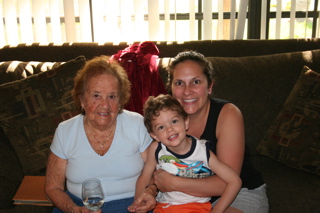
This is a picture of my mother Dorothy who is 90 years young, Kristen my mother's granddaughter, and Ryan her greatgrandson.

This picture was taken at the Banana Boat in Boyton Beach Florida, May, 2006.


Why Didn't I Get It?


The signs were there but no one could see them--not even me.


Why Didn't I Get It?

I was talking to my sister one evening and she said to me, “You better call Mom she says she hasn’t talked to you in months.” I laughed and said I talked to her two days ago and for more than an hour. Later in the evening, I decided to call my mother. After she recognized my voice she said, “Well its about time you called.” When I said I just talked to you two days ago she just shrugged it off and we began our usual conversation.
I really don’t know why I wasn’t more concerned at the time but to be honest I wasn’t. And neither was anyone else. The typical comment, “she sounds good to me.” I guess like most people I just accepted the fact that she was getting old. Nobody saw a problem not even her friends who saw her on a daily basis.
Looking back there were plenty of signs. For one thing, she was developing a very negative attitude. But, it seemed when I spent time with her, a few days, she would turn back into her normal self and start to have a more positive outlook on things. Another sign occurred when she began to scrape her feet as she walked. I suppose I should have concluded something but I didn’t. We thought she was finally slowing down. I could go on and on.
Then Christmas came and I decided to take her shopping. To my surprise she could barely walk for five minutes without stopping. In fact, she was almost slumping over. Out of the clear blue sky, or so it seemed, she just couldn’t walk any distance and it was struggle just getting her back to the car. Clearly something was a-muck.
I went to talk to her doctor. Other than her high blood pressure, her heart was fine and her overall blood work was pretty good—more than pretty good for a woman her age. Keep in mind we are talking about an 87 year old woman at the time, a woman who had never had a major illness or operation her entire life. The closest she had come to any of that was when she had an operation on a bunion on her foot.
Yet now for some reason she was no longer able to walk comfortably. I began to notice how she was somewhat unsteady, how she began to reach out and hold on to things as she walked, and how she no longer had an interest in doing anything that required her to walk. Two years earlier this woman, my mother, walked more than a mile round trip with me in New York to eat breakfast.

My Mother the Dynamo


She lived on her own, paid her own bills, and took care of herself.......


My mother at the age of 85 was a dynamo.
She lived on her own, paid her own bills, and took care of herself. She had been doing this for more than ten years since the death of my father. She was on her own.

My mother was often spotted walking to the pool in her community. A tiny women the senior citizens all around her marveled. It seemed as if father time had forgotten about her. There was no limit to what she could do. Walk 20 blocks, no problem, you name it. Up at dawn and awake at midnight she was a real dynamo.

My mother was very funny, a real character. She made people laugh and smile. She read the paper and watched CNN, she had opinion on everything and wanted to know your opinion. She was a wonderful person: always welcoming people into her home. She was noted for all of my 50 years for her great Italian cooking. I remember as a kid that all of my friends really looked forward to staying over our house. Donuts, spaghetti and meatballs you name it. Ravioli anyone?

Me? I was there with my mother when my fathered "passed away'; this was when I really started about her longevity, her health. I was thinking about her for years knowing that someday she had to live with one of us (I have a brother and sister). As the years flew by I started to think about it more and more. But she just kept going ang going without a health problem of any kind. Rarely a minor illness. She was the real energizer bunny.

At times, my brother, sister and I had discussions about putting my mother into some kind of "facility". But to be honest, to be honest now, I knew I would never be able to do it. While I had only mentioned it to a few people, I had made a promise to my father not long before he died. I promised him no matter what, I would take care of his wife of 55 years, my mother, our love. Dot. It was not a promise I made haphazardly. I made up my mind about this while we were taking care of my dying father. It seemed as natural to me as breathing. I already knew in my mind and my heart, I was the one.

I knew the day would come. I just didn't know when. Or how.

All American Senior Care

Maybe I Should Have Known


I should have started this three years ago. My, how time flies. I have a lot of catching up to do for sure so just bear with me. Some days I’ll go back to the beginning and tell you our story. On other days I will tell you what is happening on the spot. I’ll vent about my mother. If she is up to it I will encourage her to tell you in her own words what is going on in her head.......


I became a CareGiver before I had any idea that the word existed. It all started back in late 2003 after a series of strange occurrences by my mother. I guess I should have known when my mother ran her car over an abutment and scraped off the entire side of her car on a tree. Me, more than 1000 miles away, I was told the car was not that bad. Two days later and on the scene, I found out the car was totaled. Fortunately, my little tiny five foot tall, 87 year old mother was just fine. At least that is what she and all the doctors told me. While I accepted it at the time I just knew something was not right. And this is where the story about me and my mother begins.
I am just beginning this Blog. If you somehow found me, welcome. Please feel free to say 'hi". If you are a care giver or if you believe you have something to add please feel free to do so. If you have comments make them.
Ok then, this is our story.
Bobby

The Seven Stages of Alzheimer's


Experts have documented common patterns of symptom progression that occur in many individuals with Alzheimer’s disease and developed several methods of “staging” based on these patterns."

You can read this article by following the link
The Alzheimer's Reading Room: The Seven Stages of Alzheimer's