Many will discover it’s not Alzheimer’s or Parkinson’s disease at all that impairs function, instead its Lewy body dementia (LBD), the second most common form of progressive dementia after Alzheimer’s disease.
My name is Bob DeMarco, I am an Alzheimer's Caregiver. My mother Dorothy lived with Alzheimer's Disease. We lived our lives one day at a time. IAAAC is a companion site of the Alzheimer's Reading Room.
Showing posts with label brain. Show all posts
Families Learn Alzheimer's May Not Be Alzheimer's Instead It's
Google Search - Short Term Memory Problems
One of the first signs of dementia is short term memory loss. Alzheimer's is the most common form of dementia; and, a cause of short term memory problems.
Alzheimer's Self Test
These five memory tests are self assessment tests for Alzheimer's, dementia, and mild cognitive impairment.
Bing Search Recommened
A Good Night's Rest May Literally Clear the Mind
A good night's rest may literally clear the mind.
Using mice, researchers showed for the first time that the space between brain cells may increase during sleep, allowing the brain to flush out toxins that build up during waking hours.
These results suggest a new role for sleep in health and disease.
Labels:
alzheimer s,
alzheimers information,
alzheimers research,
brain,
health,
life,
medical science,
memory,
mind,
news,
rest,
sleep
The Active Brain
Labels:
alzheimer s,
brain,
memory loss
Scientists Discover that the Brain Cleans Itself
“We’re hopeful that these findings have implications for many conditions that involve the brain, such as traumatic brain injury, Alzheimer’s disease, stroke, and Parkinson’s disease.”
Alzheimer's Reading Room
Scientists have discovered a cleansing mechanism in the brain, essentially a river inside the brain.
They hope that this newly discovered fluid stream might be enlisted to flush away the buildup of proteins associated with Alzheimer’s, Huntington’s and other neurodegenerative disorders.
“It’s a hydraulic system,” said Maiken Nedergaard. “Once you open it, you break the connections, and it cannot be studied. We are lucky enough to have technology now that allows us to study the system intact, to see it in operation.”
This is Your Brain on Google
A brain study conducted by Dr. Gary Small, a UCLA expert on aging, found that people who search the Internet use more of their brain while engaging in Internet searching.
This suggests that just searching on the Internet may train the brain -- that it may keep it active and healthy," said Small, whose research appears in the American Journal of Geriatric Psychiatry.To continue reading go here.
Alzheimer's Reading Room
Editor
Subscribe to The Alzheimer's Reading Room--via Email
Popular articles on the Alzheimer's Reading Room
- Worried About Alzheimer's? The Holy Grail of Exercise
- The Metamorphosis of This Alzheimer's Caregiver (Part One)
- Test Your Memory (TYM) for Alzheimer's or Dementia in Five Minutes
- Does the Combination of Aricept and Namenda Help Slow the Rate of Decline in Alzheimer's Patients
- Five Ways to Keep Alzheimer's Away
- Is it Really Alzheimer's or Something Else?
- Alzheimer's Wandering Why it Happens and What to Do
- 50 Good Reasons to Subscribe to the Alzheimer's Reading Room Now
- World Health Care Spending and Performance Ranking by Country (Table)
- What is Dementia?
- Dementia and the Eight Types of Dementia
- Walmart and this Alzheimer's Caregiver
- Dimebon Connection Study
- Are Alzheimer's Caregivers the Forgotten?
- A Simple Three Minute Test Can Detect the Earliest Stage of Alzheimer's Disease
- Wii a Useful Tool for Alzheimer's Caregivers
- 2009 Alzheimer's Disease Facts and Figures
- The Mini-Cog Test for Alzheimer's and Dementia
Bob DeMarco is the editor of the Alzheimer's Reading Room and an Alzheimer's caregiver. The Alzheimer's Reading Room is the number one website on the Internet for news, advice, and insight into Alzheimer's disease. Bob has written more than 800 articles with more than 18,000 links on the Internet. Bob resides in Delray Beach, FL.
Original content Bob DeMarco, Alzheimer's Reading Room
Wii a Useful Tool for Alzheimer's Caregivers
The game satisfies two needs: social interaction and exercise.
Recently, I am reading articles about how Wii is being adopted by Senior centers and assisted living facilities all across the country. The game of choice seems to be bowling. Wii bowling provides moderate exercise and allows groups to get together much like they would at a bowling alley.
Ninetendo offers hundreds of games that can be played with Wii. You can exercise your body and even exercise your brain with Wii Brain Academy.
The Wii game My Fitness Coach would be particularly effective for both the person suffering from Alzheimer's and their caregiver. I know from personal experience with my mother that exercise is both necessary and important. I have written here many times about the immediate positive effect exercise has on my mother.
Dear Caregiver, you could use this tool to improve socialization by inviting friends and neighbors over to play along with you.
Friends and family of caregivers, Wii is a great gift. Perhaps you could consider "chipping in" and purchasing this for a loving caregiver or suffering family member.
Don't get detered by the name of the game. If you are older you can sit in a chair while doing the majority of the exercises. When my mother attends the Silver Sneakers program at Gold's gym she sits for most of the exercises. Keep in mind, my mother is 92 years old and suffers from Alzheimer's.
My Fitness Coach is like having a personal trainer right in your home. You can get coaching on 500 exercises including strength training, cardio fitness, and flexibility training. The game includes includes nine diiferent environments and music. If this sounds intimidating you can always go with Wii Fit. Wii Fit is less rigorous, contains hundreds of exercises, and also has a Body Mass Module. Wii Fit uses the Wii Balance Board.
I believe Wii is a wonderful tool that can be used by caregivers to satisfy personal and caregiving needs. Wii could improve your day. There are hundreds of games--so you can have fun. Both you and the person you are caring for will benefit.
Wii Sports (includes: Tennis, Baseball, Golf, Bowling and Boxing)
Wii Big Brain Academy
Wii Play inlcudes: The shooting gallery, Mii-matching game, billiards, air hockey, tank battles, table tennis rally, Mii poses and a cow-riding race)
Wii FAQ (Frequently Asked Questions)
Exercise may improve function in dementia patients
NEW YORK (Reuters Health) - Organized exercise designed to increase strength, flexibility, mobility and coordination may improve overall physical function among nursing home patients with Alzheimer's disease, researchers report.
Alzheimer's disease patients who have physically deteriorated are less able to perform activities of daily life, which, in turn, affects their quality of life. Despite the well-known physical benefits obtained from exercise, Professor Alejandro Lucia and colleagues in Spain found comparatively little research has focused on exercise training among patients with Alzheimer's disease.
To address this, Lucia, of the Universidad Europea De Madrid, and collaborators compared the outcomes of 16 Alzheimer's disease patients who were randomly assigned to receive normal care involving no programed exercise or to a12-week exercise program as part of their nursing home care.
Each group consisted of five women and three men of similar functional capacity at the start of the study. Participants' average age was 73 years in the normal care group and 76 years in the exercise group, the investigators report in the International Journal of Sports Medicine.
Exercise sessions, held 3 days each week, included 75 minutes of warm-up and cool-down stretching, inside walking, joint mobility activities, elastic exercise-band resistance training, and coordination exercises using foam balls.
Lucia's team reports the exercise group had significant improvements in measures of upper and lower body strength and flexibility; agility and balance; walking abilities; and endurance. Exercise participants also showed greater ability to independently perform activities of daily living such as rising from a chair, transferring from bed to chair, bathing, or dressing.
By contrast, the normal care group showed no changes over the 12-week period.
These findings show that shorter duration exercise programs "are sufficient to induce significant improvements in patients' functional performance and independence," the investigators state. Adherence to the training program was nearly 100 percent, they add.
While more evidence of efficacy is needed from larger study populations, Lucia and colleagues suggest similar programs could be included in the overall nursing home care of Alzheimer's disease patients.
SOURCE: International Journal of Sports Medicine, October 2008.
Follow the Alzheimer's Reading Room on Twitter
Subscribe to The Alzheimer's Reading Room--via Email
More from the Alzheimer's Reading Room
- How do you get Dimebon?
- A Simple Three Minute Test Can Detect the Earliest Stage of Alzheimer's Disease
- Five Ways to Keep Alzheimer's Away
- Ten Million Baby Boomers likely to suffer from Alzheimer’s during their lifetime
- Alzheimer's A Wonderful Moment in Time--Mom Dances for the first time in years
- 2009 Alzheimer's Disease Facts and Figures
- The Mini-Cog Test for Alzheimer's and Dementia
- What is Dementia?
- Is it Really Alzheimer's?
Alzheimer's and Brain Fitness
I mentioned before that daily exercise has a dramatic effect on the quality of my mother's daily life. I first started taking her to Gold's Gym about three years ago. I did this after reading about the potential benefits of exercise for Alzheimer's patients. I feel confident in saying that exercise has had a dramatic positive effect on her daily life, and that exercise is a critical component in staving-off the horrid effects of Alzheimer's disease.A growing body of research indicates that regular aerobic exercise can boost your brain's memory and cognitive processing speed by stimulating a process called neurogenesis (the creation of new neurons in the brain). I am including two articles that I believe you will find of interest.
That is 91 year old mom in the picture. She is pictured here riding a bicycle at Gold's Gym in Delray Beach, Florida.
Lobes of Steel
The New York Times
By GRETCHEN REYNOLDS
The Morris water maze is the rodent equivalent of an I.Q. test: mice are placed in a tank filled with water dyed an opaque color. Beneath a small area of the surface is a platform, which the mice can’t see. Despite what you’ve heard about rodents and sinking ships, mice hate water; those that blunder upon the platform climb onto it immediately. Scientists have long agreed that a mouse’s spatial memory can be inferred by how quickly the animal finds its way in subsequent dunkings. A “smart” mouse remembers the platform and swims right to it.
In the late 1990s, one group of mice at the Salk Institute for Biological Studies, near San Diego, blew away the others in the Morris maze. The difference between the smart mice and those that floundered? Exercise. The brainy mice had running wheels in their cages, and the others didn’t.
Scientists have suspected for decades that exercise, particularly regular aerobic exercise, can affect the brain. But they could only speculate as to how. Now an expanding body of research shows that exercise can improve the performance of the brain by boosting memory and cognitive processing speed. Exercise can, in fact, create a stronger, faster brain.
This theory emerged from those mouse studies at the Salk Institute. After conducting maze tests, the neuroscientist Fred H. Gage and his colleagues examined brain samples from the mice. Conventional wisdom had long held that animal (and human) brains weren’t malleable: after a brief window early in life, the brain could no longer grow or renew itself. The supply of neurons — the brain cells that enable us to think — was believed to be fixed almost from birth. As the cells died through aging, mental function declined. The damage couldn’t be staved off or repaired.
Gage’s mice proved otherwise. Before being euthanized, the animals had been injected with a chemical compound that incorporates itself into actively dividing cells. During autopsy, those cells could be identified by using a dye. Gage and his team presumed they wouldn’t find such cells in the mice’s brain tissue, but to their astonishment, they did. Up until the point of death, the mice were creating fresh neurons. Their brains were regenerating themselves.
All of the mice showed this vivid proof of what’s known as “neurogenesis,” or the creation of new neurons. But the brains of the athletic mice in particular showed many more. These mice, the ones that scampered on running wheels, were producing two to three times as many new neurons as the mice that didn’t exercise.
But did neurogenesis also happen in the human brain? To find out, Gage and his colleagues had obtained brain tissue from deceased cancer patients who had donated their bodies to research. While still living, these people were injected with the same type of compound used on Gage’s mice. (Pathologists were hoping to learn more about how quickly the patients’ tumor cells were growing.) When Gage dyed their brain samples, he again saw new neurons. Like the mice, the humans showed evidence of neurogenesis.
Gage’s discovery hit the world of neurological research like a thunderclap. Since then, scientists have been finding more evidence that the human brain is not only capable of renewing itself but that exercise speeds the process.
“We’ve always known that our brains control our behavior,” Gage says, “but not that our behavior could control and change the structure of our brains.”
The human brain is extremely difficult to study, especially when a person is still alive. Without euthanizing their subjects, the closest that researchers can get to seeing what goes on in there is through a functional M.R.I. machine, which measures the size and shape of the brain and, unlike a standard M.R.I. machine, tracks blood flow and electrical activity.
This spring, neuroscientists at Columbia University in New York City published a study in which a group of men and women, ranging in age from 21 to 45, began working out for one hour four times a week. After 12 weeks, the test subjects, predictably, became more fit. Their VO2 max, the standard measure of how much oxygen a person takes in while exercising, rose significantly.
But something else happened as a result of all those workouts: blood flowed at a much higher volume to a part of the brain responsible for neurogenesis. Functional M.R.I.’s showed that a portion of each person’s hippocampus received almost twice the blood volume as it did before. Scientists suspect that the blood pumping into that part of the brain was helping to produce fresh neurons.
The hippocampus plays a large role in how mammals create and process memories; it also plays a role in cognition. If your hippocampus is damaged, you most likely have trouble learning facts and forming new memories. Age plays a factor, too. As you get older, your brain gets smaller, and one of the areas most prone to this shrinkage is the hippocampus. (This can start depressingly early, in your 30’s.) Many neurologists believe that the loss of neurons in the hippocampus may be a primary cause of the cognitive decay associated with aging. A number of studies have shown that people with Alzheimer’s and other forms of dementia tend to have smaller-than-normal hippocampi.
The Columbia study suggests that shrinkage to parts of the hippocampus can be slowed via exercise. The subjects showed significant improvements in memory, as measured by a word-recall test. Those with the biggest increases in VO2 max had the best scores of all.
“It’s reasonable to infer, though we’re not yet certain, that neurogenesis was happening in the people’s hippocampi,” says Scott A. Small, an associate professor of neurology at Columbia and the senior author of the study, “and that working out was driving the neurogenesis.”
Other recent studies support this theory. At the University of Illinois at Urbana- Champaign, a group of elderly sedentary people were assigned to either an aerobic exercise program or a regimen of stretching. (The aerobic group walked for at least one hour three times a week.) After six months, their brains were scanned using an M.R.I. Those who had been doing aerobic exercise showed significant growth in several areas of the brain. These results raise the hope that the human brain has the capacity not only to produce new cells but also to add new blood vessels and strengthen neural connections, allowing young neurons to integrate themselves into the wider neural network. “The current findings are the first, to our knowledge, to confirm the benefits of exercise training on brain volume in aging humans,” the authors concluded.
And the benefits aren’t limited to adults. Other University of Illinois scientists have studied school-age children and found that those who have a higher level of aerobic fitness processed information more efficiently; they were quicker on a battery of computerized flashcard tests. The researchers also found that higher levels of aerobic fitness corresponded to better standardized test scores among a set of Illinois public school students. The scientists next plan to study how students’ scores change as their fitness improves.
What is it about exercise that prompts the brain to remake itself? Different scientists have pet theories. One popular hypothesis credits insulin-like growth factor 1, a protein that circulates in the blood and is produced in greater amounts in response to exercise. IGF-1 has trouble entering the brain — it stops at what’s called the “blood-brain barrier” — but exercise is thought to help it to do so, possibly sparking neurogenesis.
Other researchers are looking at the role of serotonin, a hormone that influences mood. Exercise speeds the brain’s production of serotonin, which could, in turn, prompt new neurons to grow. Abnormally low levels of serotonin have been associated with clinical depression, as has a strikingly shrunken hippocampus. Many antidepressant medications, like Prozac, increase the effectiveness of serotonin. Interestingly, these drugs take three to four weeks to begin working — about the same time required for new neurons to form and mature. Part of the reason these drugs are effective, then, could be that they’re increasing neurogenesis. “Just as exercise does,”Gage says.
Gage, by the way, exercises just about every day, as do most colleagues in his field. Scott Small at Columbia, for instance , likes nothing better than a strenuous game of tennis. “As a neurologist,” he explains, “I constantly get asked at cocktail parties what someone can do to protect their mental functioning. I tell them, ‘Put down that glass and go for a run.’ ” .
This Is Your Brain on Something Other Than Exercise
The human brain undergoes neurogenesis — the creation of new cells — throughout a person’s life, although the amount depends on a variety of factors, not just exercise.
Researchers ID Brain Network That May Help Prevent or Slow Alzheimer’s Disease
These highlighted spots of activity represent a brain network. People with more cognitive reserve may use such networks more efficiently or use alternative networks to deal with Alzheimer's pathology.
Columbia University researchers have uncovered some clues about why "mental exercise" appears to provide protection against Alzheimer’s disease and dementia.
A team from Columbia University Medical Center (CUMC) identified a brain network within the frontal lobe associated with cognitive reserve, the process that allows individuals to maintain function despite mental decline due to aging or Alzheimer’s disease.
The finding may illuminate how higher levels of cognitive reserve – thought to replenish by regular engagement in mentally stimulating activities such as taking classes, gardening and volunteering – provide such protection. Researchers hope the results of the study lead to advancements to prevent or delay the onset of Alzheimer’s disease or other age-related memory conditions. The study, published in the current issue of Cerebral Cortex, was led by Yaakov Stern, a professor at the Taub Institute for the Research on Alzheimer’s Disease and the Aging Brain and director of the Cognitive Neuroscience Division of the Gertrude H. Sergievsky Center at CUMC.
To obtain the data, researchers gave participants, categorized as young (between 18 and 30 years old) and elderly (between 65 and 80 years old), one of two different memory tasks, one involving a series of letters and a second involving a series of nonsensical shapes. Individuals completed the tasks while undergoing functional magnetic resonance imaging (fMRI).
Researchers designed the activities with increasing difficulty to allow observation of the participants’ brain activation, as the tasks got progressively harder. Findings demonstrated that individuals with higher levels of cognitive reserve were able to activate this network in the brain while working on more difficult tasks, while participants with lower levels of reserve were not able to tap into this particular network.
Related links
Interview With Dr. Stern: Complex Brain Circuits May Protect Against Alzheimer's, In Vivo, Dec. 14, 2005
Related research by Professor Stern:
The Concept of Cognitive Reserve: A Catalyst for Research
“With the identification of this brain network – located within the frontal lobe – that is active during the performance both of these verbal and spatial tasks and probably other types of tasks as well, we believe we have accomplished an important first step towards improving our understanding of how cognitive reserve is expressed within the brain,” said Stern, a professor of clinical neuropsychology in the Departments of Neurology, Psychiatry and Psychology at the Columbia University College of Physicians and Surgeons.
“The network was found more often in younger participants, signifying that the network may degrade during the natural aging process,” said Stern. “If this degradation process can be slowed or halted, it may benefit the millions of people living with devastating memory decline.”
Labels:
alzheimer's,
blog,
brain,
caregiver,
dementia,
Fred H. Gage,
neurogenesis,
Yaakov Stern
What Does Blood Pressure Have to Do With Alzheimer’s?
This is one study I would really like to get my mother into. She takes three medications now for high blood pressure and it is still out of control. In addition, I discovered after the fact that she was not taking her blood pressure medication as prescribed for years before she was diagnosed with Alzheimer's dementia. The brain needs lots of blood to work well. That’s made doctors wonder whether high blood pressure, which can reduce blood flow to the brain, is connected to cognitive problems — especially in the elderly, in whom both high blood pressure and mental decline are common. (See, for example, this recent study.)
A small study being presented today at the RSNA conference is the latest finding to suggest there may be a connection. Using a type of MRI that measures blood flow, researchers examined how high blood pressure affected blood flow in the brains of people with and without Alzheimer’s disease (abstract here).
They found that those with high blood pressure had lower levels of blood flow overall, and those with high blood pressure and Alzheimer’s had lower blood flow than those with high blood pressure but not Alzheimer’s.
In an interview with the Health Blog, the lead author, Cyrus Raji, noted that the findings, based on only 88 people, need to be validated by a larger trial. But he said the research presents an interesting possibility that could give doctors and patients yet another reason to try to control high blood pressure.
“We are not saying that hypertension causes Alzheimer’s,” said Raji, a grad student at the University of Pittsburgh. “It’s an extra hit to the brain, and an extra hit in areas that can eventually be affected by Alzheimer’s disease … If that turns out to be the case, which we won’t know until we do a lot more work, that would be a huge impetus for tighter control for hypertension, especially in the elderly.”
Trackback URL: http://blogs.wsj.com/health/2007/11/28/what-does-blood-pressure-have-to-do-with-alzheimers/trackbac
Alzheimer's Disease Could Be A Third Form Of Diabetes
This article intrigues me. I have been thinking about diabetes for sometime in relation to my mother. My grandmother likely died from diabetes and my sister is a diabetic. My mother's sugar readings are very high but none of her doctor's has ever suggested doing anything about it. This fits under the "she's old" model of medicine now being practiced.
The article is worth reading and considering.
Insulin, it turns out, may be as important for the mind as it is for the body. Research in the last few years has raised the possibility that Alzheimer's memory loss could be due to a novel third form of diabetes.
Now scientists at Northwestern University have discovered why brain insulin signaling -- crucial for memory formation -- would stop working in Alzheimer's disease. They have shown that a toxic protein found in the brains of individuals with Alzheimer's removes insulin receptors from nerve cells, rendering those neurons insulin resistant. (The protein, known to attack memory-forming synapses, is called an ADDL for "amyloid ß-derived diffusible ligand.")
With other research showing that levels of brain insulin and its related receptors are lower in individuals with Alzheimer's disease, the Northwestern study sheds light on the emerging idea of Alzheimer's being a "type 3" diabetes.
The new findings, published online by the FASEB Journal, could help researchers determine which aspects of existing drugs now used to treat diabetic patients may protect neurons from ADDLs and improve insulin signaling in individuals with Alzheimer's.
In the brain, insulin and insulin receptors are vital to learning and memory. When insulin binds to a receptor at a synapse, it turns on a mechanism necessary for nerve cells to survive and memories to form. That Alzheimer's disease may in part be caused by insulin resistance in the brain has scientists asking how that process gets initiated.
"We found the binding of ADDLs to synapses somehow prevents insulin receptors from accumulating at the synapses where they are needed," said William L. Klein, professor of neurobiology and physiology in the Weinberg College of Arts and Sciences, who led the research team. "Instead, they are piling up where they are made, in the cell body, near the nucleus. Insulin cannot reach receptors there. This finding is the first molecular evidence as to why nerve cells should become insulin resistant in Alzheimer's disease."
ADDLS are small, soluble aggregated proteins. The clinical data strongly support a theory in which ADDLs accumulate at the beginning of Alzheimer's disease and block memory function by a process predicted to be reversible.
In earlier research, Klein and colleagues found that ADDLs bind very specifically at synapses, initiating deterioration of synapse function and causing changes in synapse composition and shape. Now Klein and his team have shown that the molecules that make memories at synapses -- insulin receptors -- are being removed by ADDLs from the surface membrane of nerve cells.
"We think this is a major factor in the memory deficiencies caused by ADDLs in Alzheimer's brains," said Klein, a member of Northwestern's Cognitive Neurology and Alzheimer's Disease Center. "We're dealing with a fundamental new connection between two fields, diabetes and Alzheimer's disease, and the implication is for therapeutics. We want to find ways to make those insulin receptors themselves resistant to the impact of ADDLs. And that might not be so difficult."
Using mature cultures of hippocampal neurons, Klein and his team studied synapses that have been implicated in learning and memory mechanisms. The extremely differentiated neurons can be investigated at the molecular level. The researchers studied the synapses and their insulin receptors before and after ADDLs were introduced.
They discovered the toxic protein causes a rapid and significant loss of insulin receptors from the surface of neurons specifically on dendrites to which ADDLs are bound. ADDL binding clearly damages the trafficking of the insulin receptors, preventing them from getting to the synapses. The researchers measured the neuronal response to insulin and found that it was greatly inhibited by ADDLs.
"In addition to finding that neurons with ADDL binding showed a virtual absence of insulin receptors on their dendrites, we also found that dendrites with an abundance of insulin receptors showed no ADDL binding," said co-author Fernanda G. De Felice, a visiting scientist from Federal University of Rio de Janeiro who is working in Klein's lab. "These factors suggest that insulin resistance in the brains of those with Alzheimer's is a response to ADDLs."
"With proper research and development the drug arsenal for type 2 diabetes, in which individuals become insulin resistant, may be translated to Alzheimer's treatment," said Klein. "I think such drugs could supercede currently available Alzheimer's drugs."
Klein, Grant A. Krafft, formerly at Northwestern University's Feinberg School of Medicine and now chief scientific officer at Acumen Pharmaceuticals, Inc., and Caleb E. Finch, professor of biological sciences and gerontology at the University of Southern California, reported the discovery of ADDLs in 1998. Krafft is a co-author of the FASEB Journal paper. Northwestern and USC hold joint patents on the composition and use of ADDLs in neurodisorders.
The patent rights have been licensed to Acumen Pharmaceuticals, based in South San Francisco, for the development of drugs that treat Alzheimer's disease and other memory-related disorders.
In addition to Klein, De Felice and Krafft, other authors on the paper are Wei-Qin Zhao, a former visiting scientist at Northwestern, now with Merck & Co., Inc. (lead author); Hui Chen, from the National Center for Complementary and Alternative Medicine at the National Institutes of Health; Michael Quo, from Blanchette Rockefeller Neurosciences Institute; and Sara Fernandez and Mary Lambert, from Northwestern University.
Note: This story has been adapted from a news release issued by Northwestern University.
Source Science Daily, research Nothwestern University.
Labels:
alzheimer's,
brain,
caregiving,
dementia,
diabetes,
elder care,
insulin,
memory loss,
northwestern university
Clinical Trial: Omega 3 Fatty Acid, Slowing the Progression of Alzheimer's Disease
This study is currently recruiting patients.
Personal Note: I have been feeding my mother fish and giving her Omega 3 Oil daily for a couple of years. I believe it is beneficial.
For a complete description of the trial including eligibility requirements go to the Clinical Trials Page
Official Title: A Randomized Double-Blind Placebo-Controlled Trial Of The Effects Of Docosahexaenoic Acid (DHA) In Slowing The Progression Of Alzheimer’s Disease
Study Type: Interventional
Study Design: Treatment, Randomized, Double-Blind, Placebo Control, Parallel Assignment, Efficacy Study
Further study details as provided by National Institute on Aging (NIA)
Primary Outcome Measures:
Changes in rate of cognitive and functional decline measured by ADAS-Cog and CDR-SOB
Preliminary studies have shown a reduced risk of Alzheimer's disease (AD) in people consuming increased amounts of fish in their diets. Many of the health benefits of fish are attributed to the abundance of omega 3 fatty acids. Docosahexaenoic Acid (DHA) is the most abundant omega 3 fatty acid in the brain. Data from several animal models supports the hypothesis that DHA may be an effective treatment for AD by means of anti-amyloid, antioxidant, and neuroprotectant mechanisms.
In this study, 400 individuals with mild to moderate AD will participate at approximately 53 study sites throughout the US for 18 months. Participants will be randomized so that 60% will receive approximately 2 grams of DHA, divided into 4 capsules, 2 capsules taken twice a day, while 40% receive an identical placebo.
Potential participants will go to their study site for a screening visit, where eligibility is determined, and if accepted, for a baseline visit where cognitive status, behavioral status, functional status, and global severity of dementia will be assessed. Vital signs and biomarker labs will also be obtained. Subsequent visits will occur every three months for medication checks and, every 6 months, further assessments, physical exams, and labs.
Some participants will also take part in MRI (magnetic resonance imaging) and/or CSF (cerebrospinal fluid) sub-studies. For the MRI sub-study, scans will be done prior to beginning the study medication, and again after 18 months. Likewise, for the CSF sub-study, a lumbar puncture will be done prior to beginning the study medication, and again after 18 months.
Enrollment is restricted to individuals who consume no more than 200 mg of DHA per day, which is almost 300% of the average daily intake in an American diet. Individuals who take fish oil or omega 3 fatty acid supplements are also not eligible. Each visit will include completion of a very brief food frequency questionnaire to monitor dietary DHA levels.
Probing Question
Most of us have had the experience of forgetting where we've parked our car or have struggled to recall an acquaintance's name. But once we hit our 50s, said James R. Connor, these incidents might cause us to worry that we're showing early signs of Alzheimer's disease.
Source Penn State Live
Penn State Research
By Melissa Beattie-Moss
Research Penn State
Most of us have had the experience of forgetting where we've parked our car or have struggled to recall an acquaintance's name. But once we hit our 50s, said James R. Connor, these incidents might cause us to worry that we're showing early signs of Alzheimer's disease.
Fortunately, that's not usually the case, says Connor, professor of neurosurgery in Penn State's College of Medicine, Penn State Hershey Medical Center. "If forgetting something now and then was a good indicator of dementia, we'd all be in trouble," he added with a laugh.
This dreaded condition was first classified as a disease 100 years ago by German psychiatrist Alois Alzheimer and is the "leading cause of dementia in the elderly," explained Connor. In fact, four million Americans now suffer from this progressive disease, including up to 50 percent of seniors over age 85 and up to 15 percent of those over 65.
The aging of baby boomers will swell those numbers in the coming years. "At the present time, Alzheimer's disease (AD) costs the nation $100 billion a year, with an average $174,000 lifetime cost per patient," Connor said. "By the year 2050, there will be an estimated 14 million Americans with the disease. The human and economic toll is devastating, so it's imperative that we learn more about prevention, early diagnosis and treatment."
Is it possible to prevent Alzheimer's? For those who already have signs of persistent memory decline, there are some neurosurgical procedures and therapeutic drugs available that may help slow the disease's ravages, Connor noted. But for the millions of "worried well," science has not yet found any definitive ways to prevent the disease.
Although recent research suggests that genes may play a role in contracting the disease, "the No. 1 risk factor for Alzheimer's is aging," said Connor. "You have to live long enough to develop this disease," which researchers believe to be caused, in part, by a sticky protein called "amyloid plaque" that accumulates on brain cells, disrupting the transmission of their signals. "Neurofibrillary tangles" -- protein threads that strangle and eventually kill nerve cells -- are also present in the brains of AD patients. "If we have a computer with cables that are broken and tangled, it won't work right, and it's the same with our brains," added Connor.
Scientists speculate that the protein coatings and tangles within the brain could be the body's inflammatory response to long-term toxin exposure, as well as damage from "free radicals," unstable molecules that attack and harm the body's cells by stealing their electrons through a process called oxidation.
Although some studies suggest that anti-inflammatory drugs (including common painkillers such as ibuprofen and naproxen) may help to dissolve amyloid plaques, "we need to proceed with caution in this area," Connor believes. One paradox of the disease, he says, is that "there may be a positive function to the plaques. They may be the body's way of sealing off leaky blood vessels in the brain."
Many researchers believe that metals (chiefly iron, copper and zinc) may play a role in Alzheimer's, since these substances are abundant within the folds of plaque in diseased brains. When free radicals bump into metal atoms in the body, they unleash a chain reaction that can wreak havoc on healthy cells, prematurely aging them and potentially leading to a variety of serious health conditions. MRIs and autopsies of patients with advanced Alzheimer's often reveal massive iron accumulation, Connor noted.
Although excess metals may damage the brain, he adds, another paradox is that small amounts of these micronutrients are absolutely essential to healthy brain function.
Research on the exact link between metals and memory processing is inconclusive at this point. "Is there too much copper or too little in the brains of AD patients? Studies are unclear," Connor remarked. So, too, is the role of zinc, he added. Though there's high zinc content in the healthy hippocampus -- the part of the brain responsible for short-term memory -- the jury is still out on the connection, so there's no reason to recommend zinc supplements at this point. Too much might cause a problem as well. It's all about the right balance.
Nor should one completely avoid dietary iron or copper, suggested Connor, although some physicians recommend "decreasing your iron burden" through occasional blood donation, particularly for men and post-menopausal women, who are at higher risk for accumulating iron and for developing neurodegenerative diseases.
Other recommendations made by some physicians (particularly for patients noticing subtle cognitive decline) include taking antioxidants such as vitamins E and C, going for chelation therapy and making dietary changes.
"Remember," said Connor, "that if you flip the statistics, at least half of those over 85 don't have Alzheimer's. In addition to studying those with the disease, we're also studying seniors with good short-term memories, looking for predictors of healthy neurocognitive aging."
***
James R. Connor is professor and vice chair in the department of neurosurgery at the Penn State College of Medicine, available at jrc3@psu.edu via e-mail. This feature is based on a lecture given by Connor on Jan. 27 at University Park as the first of the 2007 Penn State Lectures on the Frontiers of Science.
For more Probing Questions and other features about research at Penn State, subscribe to Research Penn State at http://www.rps.psu.edu/cgi-bin/subscribe.cgi online.
Wishing each and every one of you a Happy, Healthy New Year

Dorothy after having too much fun over Christmas.
Bobby and Dorothy wish everyone a Healthy, Happy New Year!
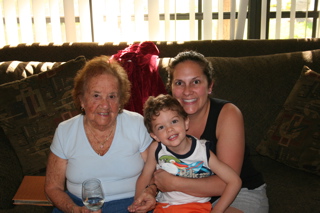
My Mother

This is a picture of my mother Dorothy who is 90 years young, Kristen my mother's granddaughter, and Ryan her greatgrandson.
This picture was taken at the Banana Boat in Boyton Beach Florida, May, 2006.
My Mother the Dynamo
She lived on her own, paid her own bills, and took care of herself.......
My mother at the age of 85 was a dynamo. She lived on her own, paid her own bills, and took care of herself. She had been doing this for more than ten years since the death of my father. She was on her own.
My mother was often spotted walking to the pool in her community. A tiny women the senior citizens all around her marveled. It seemed as if father time had forgotten about her. There was no limit to what she could do. Walk 20 blocks, no problem, you name it. Up at dawn and awake at midnight she was a real dynamo.
My mother was very funny, a real character. She made people laugh and smile. She read the paper and watched CNN, she had opinion on everything and wanted to know your opinion. She was a wonderful person: always welcoming people into her home. She was noted for all of my 50 years for her great Italian cooking. I remember as a kid that all of my friends really looked forward to staying over our house. Donuts, spaghetti and meatballs you name it. Ravioli anyone?
Me? I was there with my mother when my fathered "passed away'; this was when I really started about her longevity, her health. I was thinking about her for years knowing that someday she had to live with one of us (I have a brother and sister). As the years flew by I started to think about it more and more. But she just kept going ang going without a health problem of any kind. Rarely a minor illness. She was the real energizer bunny.
At times, my brother, sister and I had discussions about putting my mother into some kind of "facility". But to be honest, to be honest now, I knew I would never be able to do it. While I had only mentioned it to a few people, I had made a promise to my father not long before he died. I promised him no matter what, I would take care of his wife of 55 years, my mother, our love. Dot. It was not a promise I made haphazardly. I made up my mind about this while we were taking care of my dying father. It seemed as natural to me as breathing. I already knew in my mind and my heart, I was the one.
I knew the day would come. I just didn't know when. Or how.
All American Senior Care
My mother at the age of 85 was a dynamo. She lived on her own, paid her own bills, and took care of herself. She had been doing this for more than ten years since the death of my father. She was on her own.
My mother was often spotted walking to the pool in her community. A tiny women the senior citizens all around her marveled. It seemed as if father time had forgotten about her. There was no limit to what she could do. Walk 20 blocks, no problem, you name it. Up at dawn and awake at midnight she was a real dynamo.
My mother was very funny, a real character. She made people laugh and smile. She read the paper and watched CNN, she had opinion on everything and wanted to know your opinion. She was a wonderful person: always welcoming people into her home. She was noted for all of my 50 years for her great Italian cooking. I remember as a kid that all of my friends really looked forward to staying over our house. Donuts, spaghetti and meatballs you name it. Ravioli anyone?
Me? I was there with my mother when my fathered "passed away'; this was when I really started about her longevity, her health. I was thinking about her for years knowing that someday she had to live with one of us (I have a brother and sister). As the years flew by I started to think about it more and more. But she just kept going ang going without a health problem of any kind. Rarely a minor illness. She was the real energizer bunny.
At times, my brother, sister and I had discussions about putting my mother into some kind of "facility". But to be honest, to be honest now, I knew I would never be able to do it. While I had only mentioned it to a few people, I had made a promise to my father not long before he died. I promised him no matter what, I would take care of his wife of 55 years, my mother, our love. Dot. It was not a promise I made haphazardly. I made up my mind about this while we were taking care of my dying father. It seemed as natural to me as breathing. I already knew in my mind and my heart, I was the one.
I knew the day would come. I just didn't know when. Or how.
All American Senior Care
Maybe I Should Have Known
I should have started this three years ago. My, how time flies. I have a lot of catching up to do for sure so just bear with me. Some days I’ll go back to the beginning and tell you our story. On other days I will tell you what is happening on the spot. I’ll vent about my mother. If she is up to it I will encourage her to tell you in her own words what is going on in her head.......
I became a CareGiver before I had any idea that the word existed. It all started back in late 2003 after a series of strange occurrences by my mother. I guess I should have known when my mother ran her car over an abutment and scraped off the entire side of her car on a tree. Me, more than 1000 miles away, I was told the car was not that bad. Two days later and on the scene, I found out the car was totaled. Fortunately, my little tiny five foot tall, 87 year old mother was just fine. At least that is what she and all the doctors told me. While I accepted it at the time I just knew something was not right. And this is where the story about me and my mother begins.
I am just beginning this Blog. If you somehow found me, welcome. Please feel free to say 'hi". If you are a care giver or if you believe you have something to add please feel free to do so. If you have comments make them.
Ok then, this is our story.
Bobby
I became a CareGiver before I had any idea that the word existed. It all started back in late 2003 after a series of strange occurrences by my mother. I guess I should have known when my mother ran her car over an abutment and scraped off the entire side of her car on a tree. Me, more than 1000 miles away, I was told the car was not that bad. Two days later and on the scene, I found out the car was totaled. Fortunately, my little tiny five foot tall, 87 year old mother was just fine. At least that is what she and all the doctors told me. While I accepted it at the time I just knew something was not right. And this is where the story about me and my mother begins.
I am just beginning this Blog. If you somehow found me, welcome. Please feel free to say 'hi". If you are a care giver or if you believe you have something to add please feel free to do so. If you have comments make them.
Ok then, this is our story.
Bobby
Subscribe to:
Posts (Atom)


