Showing posts with label caregiving. Show all posts

Is Alzheimer's Everywhere?


My name is Bob DeMarco, I am an Alzheimer's caregiver. My mother Dorothy, now 93 years old, lives with Alzheimer's disease.


Is Alzheimer's everywhere?

I don't get out much these days. But, I make an effort to take my mother out every Friday night. We always go to a place where we can easily interact with people. This is part of the effort to keep my mother socialized and in the "world".

Last night, we went to Vic and Angelo's in downtown Delray Beach, Florida. A really fantastic venue. If you click on the image to the left, you'll hear a nice rendition of a song you might recognize.

Why I Thanked a Caregiver


My older sister Linda Goyer Lane is part of the “sandwich generation”—people who care for their aging parents while simultaneously supporting children of their own.

Alzheimer's Care, Life, Burden, Happiness, Joy


We are often constrained in our caregiving effort by our own inability to understand that Alzheimer's patients are capable of more than we can imagine.

Alzheimer's Care, Life,  Burden, Happiness,  Joy
I'm sitting here thinking about my eight and a half years as an Alzheimer's caregiver. Together Dotty and I traveled an interesting path - from burden to Joy.

As I think of the first eighteen months I now realize how emotionally painful it was. How painful it can be.

There is no doubt that caring for anyone who is ill is burdensome. But caring for someone living with Alzheimer's or a related dementia can in some ways seem tortuous if you allow it to be so.

Typically, Alzheimer's patients decline slowly over a long period of time. This period of time typically lasts 7 to 8 years.

It took me a long time to realize this, even though I knew it. For the first couple of years when people would ask, how long do you think you will be doing this? I usually answered another year or two.

However, once I decided, became determined really, to keep Dotty at home to the very end if possible, my answer became very simple, at least one more day.

That is how I began to envision our life, one day at a time.

The Metamorphosis of This Alzheimer's Caregiver (Part One)


My name is Bob DeMarco, I am an Alzheimer's caregiver. My mother Dorothy, now 93 years old, suffers from Alzheimer's disease. We live our lives one day at a time.
I am an Alzheimers caregiver, I am the One, and if you are here you are not Alone.


To start, I am a curious person. So, when I want to know more about something I really dig in. Take it apart and put it back together.

I'm fortunate in two ways. I picked great parents, and God and my parents blessed me with an ability to read fast, and absorb information.

My brain is wired to view everything as a system. This allows me to see all the parts when I encounter something new, or when I am trying to figure things out.

When focused, I am goal oriented.

When I first learned my mother was suffering from dementia, I quickly learned you could put everything I knew about dementia and Alzheimer's in a thimble.

So, I started reading. The more I learned the more I wanted to know. I learned a great deal about Alzheimer's disease--including the science. It helped me understand a very mystifying disease. It helped me to put a frame around something that is difficult if not impossible to describe.

-----------------------------------------------------------------------------------------
Subscribe to The Alzheimer's Reading Room--via Email

At the beginning of my travels with Alzheimer's, I had to get over the shock when the diagnosis of dementia came. That took what seemed like a minute, but it was over a year.

Once I could think clearly, I decided I needed a plan. Some of it was easy--exercise, nutrition, and creating a stable environment. Finding a great personal care physician was a bigger challenge. I'm thankful I somehow realized how important this decision would be for us.

Exercise is a critical component of the care-ee, care-er paradigm. I have written often about how my mother is often "dull" and can barely walk as we head to the gym. And how, she undergoes an almost impossible to believe physical, psychological and emotional transition by the time we leave the gym.

I have not spent as much time explaining the importance of exercise for the caregiver. In order to function as an Alzheimer's caregiver you are going to need an enormous amount of energy.

The only way I know to increase the energy level is with vigorous exercise and good nutrition. As a caregiver, you need to understand that more than 40 percent of Alzheimer's caregivers suffer from depression. Exercise is an important component in the battle to keep depression away.

I am asked daily how I care for my mother, and attend to this blog. Well, I have a 17 hour day, no naps. You need lots of energy to keep that kind of schedule. I guess it is not well understood but you get more energy, not tired, when you exercise--hard.

-----------------------------------------------------------------------------------------

I continue to learn more and more about Alzheimer's each day. I continued reading and talking to those who came before me. Over time, I realized how difficult it was to find information that really helped me do my day job--living Alzheimer's from the front row.

Frankly, I read thousands of articles and all the books. I did get a good piece of information here, and a good piece of information there. This took years. There really is no one single place to turn to to get the kinds of on the job information you need to get through the day as an Alzheimer's caregiver.

-----------------------------------------------------------------------------------------

When I finally learned that I was an Alzheimer's caregiver; I realized I needed to define my role as a caregiver. Thinking of myself as a caregiver made me feel good--it made me feel good about myself. My first blog was called, I am an Alzheimer's caregiver. I used that blog to start getting a handle on the enormous amount of information I was acquiring, and to define myself. I guess you could say from those seeds came the Alzheimer's Reading Room.

-----------------------------------------------------------------------------------------

One day, I met two wonderful people--by chance. They listened to me, shaking their heads up and down (saying yes nonverbally). When I was done venting, they told me about their own round trip ride with their mother who suffered from Alzheimer's.

That day I learned one of my important lessons, I was not alone. This realization lifted a thousand pound weight off my back. It allowed me to really start thinking more clearly about developing a plan to take care of my mother.

I already knew from my life prior to caregiving--in order to succeed you need a vision, a mission, and a plan to bring that vision to fruition. I started developing a vision of how I wanted life to be for my mother and me.

-----------------------------------------------------------------------------------------

Soon after encountering those two wonderful people that taught me I was not alone, I had a set back that almost sent me into the black hole--depression.

My mother had been buying lottery tickets daily for 20 years. Cash 3, Fantasy Five, Lottery. And, those crazy scratch off tickets. I got what I thought was a great idea. Instead of buying them everyday, why not buy all of them once a week. I started doing that on my own--for my mother.

Then the worst day ever came. I took my mother into the store. I handed her the plastic envelope with all the lottery cards and the money and said--go get the lottery tickets. She had no idea what I was talking about. She said where? I pointed--over there, she didn't move. I took her hand and walked her over to the counter. I said, go ahead. She said, what do I do? She didn't know what to do (this took place four and a half years ago).

At that point, I felt like I was being electrocuted. Later that day I started to feel disoriented. At home, I couldn't shake a feeling of helplessness.

I am a thinker, and was thinking about what I should do. But instead of a plan, I kept thinking we are near the end. She won't know me soon. She is going to be laying in bed, she won't be able to eat. All day and all night this was all I could think about. The stress was enormous.

I did feel like I was going into the black hole of depression. I felt myself fighting.

Then miraculously I learned one of the most important lesson of them all. You Are the One.

We were in the doctors office, the office of our wonderful doctor--Dr. Carlos Chiriboga. I was explaining to him what happened and how I was feeling.

He explained to me that if I didn't let my mother do things, she would forget how to do them. In other words, it was not necessary, nor was it a good idea for me to be doing everything for her.

He then stunned me. He said, You Are the One. You know what she can and cannot do--so if you think she can do it, let her do it. He told me I might get criticism, but not to let it deter me.

I went home and thought about this. Sure enough, the thousand pound weight was off my back (again). Once again, I felt empowered.

My new mantra became--I am an Alzheimer's caregiver, I Am not Alone, and I Am the ONE. I recite this mantra when I wake up in the morning, and before I go to bed. I look at myself in the mirror while doing this. I always smile.

-----------------------------------------------------------------------------------------

As time went on, I started to get a new vision. Soon, I started doing lots of things that were out of the box. Amazingly, just about everyone of them worked.

Imagine my 88 year old mother no longer going to the Silver Sneakers class, but working out with me in the gym. I can't tell you how many people--all women--that yelled at me, and told me to get my mother off the treadmill and on to a bike. Great in theory, and I had tried it. She would peddle for 15 seconds and then stop.

I learned to hold my hand up, palm out, when these people came at me, and not say a single word. I just looked them right in the eye. Until they walked away. I thought about what Dr. Chiriboga has told me--don't let anyone deter you.

I'm the one, and I knew my mother could walk on the treadmill even tough at times it looked like she was going to keel over. Then she would stand up straight and start walking. You might not believe this but around the six minute, 30 second mark every time she would start bending over like she was going to fall. At the 7 minute mark she would stand straight up and start walking. It happened every time for years. I guess it looks kind of ugly. To me it is all part of a pattern.

If you thought that was crazy then imagine the look on the faces of the people in the gym when I started putting my mother on the weight machines. Amazingly, my mother hates the treadmill, she loves the weight machines. She cannot wait to do the shoulder pulls, chest pulls, etc. She doesn't really like the leg machine.

By the way, after a while, one by one people started coming up to me in the gym and praising me. They usually say--you are a good son. Sometimes they want to talk to me. People that see us all the time, smile and talk to my mother. It all came together very nicely.

I still get the occasional person that wants to rain on our parade.

-----------------------------------------------------------------------------------------

I didn't realize it at the time but I was undergoing a real metamorphosis as a caregiver. In the beginning, the first stage, I was just trying to accept Alzheimer's. Get out of denial and get on with the important parts of caregiving.

Then one day--a couple of years in--I came to a realization--it was time to say NO to Alzheimer's. I decided to fight.

I decided I would not accept the crazy behavior, the incontinence, and I would not continue to live in a shell. Instead, I would find ways to change things.

First, we would go out in the world and resume living our life the way we had before the diagnosis. Second, I would find a new way to communicate with my mother. Third, I would identify each problem that comes with the disease and tackle it head on.

Change, not acceptance.

------------------------------------------------------------------------------------------

One of the most important observations I made was that my mother had very well defined patterns of behavior.
  • How she walked on the treadmill,
  • How she spit venom at me with her words,
  • How she woke up at 1:25 AM, 4:30 AM,
  • How she wanted to start cleaning the house at 9:37 PM,
  • How when she would get mad at me, go into her room, then would come out of her room at 7:09 PM,
  • How Monday and Tuesday's were good days,
  • Wednesday the downtrend started into Thursday,
  • How she would go in here room and curl up into a ball on Thursday and not come out until Friday.

I started to wonder if I could change these patterns, and change them into positive patterns. I'll answer that question right here--Yes you can. I'll be writing about how I did it soon.

-----------------------------------------------------------------------------------------

I am an Alzheimers caregiver, I am the One, and if you are here you are not Alone.

End part one.

Popular articles on the Alzheimer's Reading Room

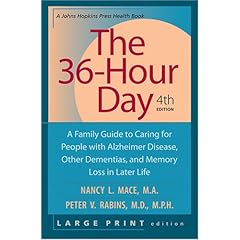
The 36-Hour Day: A Family Guide to Caring for People with Alzheimer Disease, Dementia, and Memory Loss

Bob DeMarco is the editor of the Alzheimer's Reading Room and an Alzheimer's caregiver. The Alzheimer's Reading Room is the number one website on the Internet for news, advice, and insight into Alzheimer's disease. Bob has written more than 800 articles with more than 18,000 links on the Internet. Bob resides in Delray Beach, FL.
Original content Bob DeMarco, Alzheimer's Reading Room

Alzheimer's Reading Room Flashback


Americans Fear Alzheimer’s More Than Heart Disease, Diabetes or Stroke
A study by the MetLife Foundation found that Americans fear getting Alzheimer's disease more than heart disease, stroke, or diabetes. Alzheimer's ranks second in the minds of American's only to cancer.
To continue reading go here.

The Seven Stages of Alzheimer's
Experts have documented common patterns of symptom progression that occur in many individuals with Alzheimer’s disease and developed several methods of “staging” based on these patterns.
To continue reading go here.

James Smith: I'm 45 Years Old, I can't have Alzheimer's
My doctors initially diagnosed it as possible depression. I accepted the diagnosis, and started taking the medications they prescribed. The medications didn’t change the symptoms, even after taking them for several months. Also, the doctors noted that I didn’t seem to exhibit other signs of depression.
To continue reading go here.

Keeping time with Alzheimer's
"When guilt catches up with me, I am on the bike path above the creek, ducks swimming along beside me. Guilt rolls off our backs like you know what. Alone at last, I walk at my own pace. Fast. Fast is what Ben can no longer do -- and fast is slow compared with the woman coming toward me as I near the marsh. She is wearing shorts and earphones. She smiles and I smile back. What a good idea this is, walking out in the sun and cold. What could produce better clarity? I don't have to work it out the first day. I don't have to do it right the first time."
To continue reading go here.

Original content the Alzheimer's Reading Room

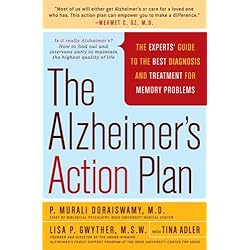
The Alzheimer's Action Plan


“Most of us will either get Alzheimer’s or care for a loved one who has"

"This book is the most comprehensive and up-to-date guide for the diagnosis and management of Alzheimer's disease. Whether you are a health care professional or have Alzheimer's in your family or are simply interested to living to an old age, this book is a must read."
--Deepak Chopra, M.D., New York Times bestselling author of Perfect Health: The Complete Mind/Body Guide


Insight and Advice about Alzheimer's Disease
Subscribe to The Alzheimer's Reading Room
"Memory does matter. Adults across the life cycle are asking questions, many questions! The authors answer these questions for the educated public, family members who encounter memory loss in a loved one, and even adults who believe they are experiencing early memory loss. The answers are comprehensive and understandable, no small accomplishment given the plethora of new information available—information that at times is not only confusing but also conflicting."
--Dan G. Blazer, M.D., Ph.D., former Dean of Medical Education, Duke University School of Medicine; past President of the American Geriatrics Society
"Dr. Doraiswamy has done a masterful job of communicating what the layman should know on the treatment, the care giving and, most important, the prevention of Alzheimer's. It was gratifying to learn about the mountain of evidence that what is good for your heart is also good for your brain."
--Arthur Agatston, M.D., cardiologist and #1 New York Times bestselling author of The South Beach Diet
"I love this book! A powerful and vital resource for people who need it the most. Dr. Doraiswamy is that unique blend of medical expertise mixed in with warmth and compassion topped off with humility that makes him rare and wonderful."
--Leeza Gibbons, Emmy award-winning TV host and founder of Leeza's Place and the Memory Foundation
"Lisa Gwyther is a national treasure. She has been a pioneer in providing innovative care and education for Alzheimer’s patients and their families for many years. Lisa’s long experience helping families cope with the challenges of memory loss and Alzheimer’s disease makes her uniquely qualified to co-author this book. Families experiencing the new world of memory loss and Alzheimer’s couldn’t ask for a better companion for the journey. Her warmth, compassion, and wisdom shine through, and will help light the way."
--Pat Lynch, Director of Communications, Alzheimer’s Center Program, National Institute on Aging
"Most of us will either get Alzheimer's or care for a loved one who has. This action plan can empower you to make a difference."
--Mehmet C. Oz, M.D., co-author of the #1 New York Times bestseller, You: The Owner’s Manual
"Five million Americans have Alzheimer disease, and an even larger number with mild to moderate memory loss are at high risk of developing this illness. Murali Doraiswamy, a leading clinical researcher in Alzheimer disease, and Lisa Gwyther, a founder of the Alzheimer Association, have co-authored this timely, state-of-the-art book directed at patients with Alzheimer disease, their informants, and their primary care physicians....I fully predict that this exceptionally well-written, reader-friendly book will become the standard resource for patients with Alzheimer disease and their loved ones. Its up-to-date information, patient-centered approach, and focus on prevention and treatment directed at patients with incipient Alzheimer disease distinguish it from The 36 Hour Day by Nancy Mace and Peter Rabins, which is directed at caregivers of patients with moderate to severe Alzheimer disease."
--JAMA (Journal of the American Medical Association)

Bob DeMarco is an Alzheimer's caregiver and editor of the Alzheimer's Reading Room. The Alzheimer's Reading Room is the number one website on the Internet for advice and insight into Alzheimer's disease. Bob taught at the University of Georgia, was an executive at Bear Stearns, the CEO of IP Group, and is a mentor. He has written more than 700 articles with more than 18,000 links on the Internet. Bob resides in Delray Beach, FL.

More from the Alzheimer's Reading Room


Original content the Alzheimer's Reading Room

Follow the Alzheimer's Reading Room on Twitter

I'm Hungry, I'm Starving


My mother utters those words at least 20 times each day.

This morning right after she finished eating her oatmeal, and with the bowl still in front of her, my mother said, "I'm hungry, I'm starving".

Back during that difficult, very trying, first year, my mother would eat constantly. It was driving me crazy.

It honestly made me feel crazy and disconcerted.

Then one lucky day in the gym, I mentioned to two complete strangers how this was making me nuts. They had already gone the full round trip with Alzheimer's.

As I vented, they stood there listening, smile on their faces, head nodding up and down yes, and listened to me vent.

When I finished, they told me about their very similar experience(s). They gave me a great deal of encouragement. Even though I never saw them again, I think of them often.

They changed my life.

It was later that day that the little light bulb in my head went on.

I realized -- I am not alone. There are millions of people, just like me, going through the same experiences, day in, day out. Millions all over the world.

I thought about the smiles on the faces of the two people I met in the gym. The encouragement and positive feedback they offered. Their kindness.

I decided, right then and right there, to learn as much as I could about Alzheimer's.

I decided that I would do everything possible to get control of the crazy situation I found myself living, day in, day out.

I decided that sooner or later, I would become a happy caregiver.

I made it.

The Alzheimer's Reading Room is all about changing the lives of Alzheimer's caregivers. For the better.

At the end of the day, I want each and every person that comes here to know -- they are not alone.

I want them to know that Alzheimer's is a sinister disease that will try to ruin their life. But, it doesn't have to be that way.

I want them to know, if it is up to me, that is not going to happen.

The collective brain of the Alzheimer's Reading Room is growing each and every day.

Each person that makes a comment, shares their words of wisdom, or offers advice on this website lets another Alzheimer's caregiver know -- they are not alone.

One by one, we help each other turn on the little light bulb in our head.

I'm happy to be a part of it.

Gotta go, "I'm hungry, I'm starving".
For more Insight into Alzheimer's Disease
Subscribe to The Alzheimer's Reading Room

Bob DeMarco is an Alzheimer's caregiver and editor of the Alzheimer's Reading Room. The Alzheimer's Reading Room is the number one website on the Internet for insight into Alzheimer's disease. Bob taught at the University of Georgia, was an executive at Bear Stearns, the CEO of IP Group, and is a mentor. He has written more than 600 articles with more than 11,000 links on the Internet. Bob resides in Delray Beach, FL.


More from the Alzheimer's Reading Room


Follow the Alzheimer's Reading Room on Twitter

Wii a Useful Tool for Alzheimer's Caregivers


Back in May I wrote about Wii Fit suggesting it would be an excellent tool for older people and those suffering from Alzheimer's disease.

The game satisfies two needs: social interaction and exercise.

Recently, I am reading articles about how Wii is being adopted by Senior centers and assisted living facilities all across the country. The game of choice seems to be bowling. Wii bowling provides moderate exercise and allows groups to get together much like they would at a bowling alley.

Ninetendo offers hundreds of games that can be played with Wii. You can exercise your body and even exercise your brain with Wii Brain Academy.

The Wii game My Fitness Coach would be particularly effective for both the person suffering from Alzheimer's and their caregiver. I know from personal experience with my mother that exercise is both necessary and important. I have written here many times about the immediate positive effect exercise has on my mother.
Dear Caregiver, you could use this tool to improve socialization by inviting friends and neighbors over to play along with you.

Friends and family of caregivers, Wii is a great gift. Perhaps you could consider "chipping in" and purchasing this for a loving caregiver or suffering family member.

Don't get detered by the name of the game. If you are older you can sit in a chair while doing the majority of the exercises. When my mother attends the Silver Sneakers program at Gold's gym she sits for most of the exercises. Keep in mind, my mother is 92 years old and suffers from Alzheimer's.

My Fitness Coach is like having a personal trainer right in your home. You can get coaching on 500 exercises including strength training, cardio fitness, and flexibility training. The game includes includes nine diiferent environments and music. If this sounds intimidating you can always go with Wii Fit. Wii Fit is less rigorous, contains hundreds of exercises, and also has a Body Mass Module. Wii Fit uses the Wii Balance Board.

I believe Wii is a wonderful tool that can be used by caregivers to satisfy personal and caregiving needs. Wii could improve your day. There are hundreds of games--so you can have fun. Both you and the person you are caring for will benefit.

What is Wii
Wii Sports (includes: Tennis, Baseball, Golf, Bowling and Boxing)
Wii Big Brain Academy

Wii Play inlcudes: The shooting gallery, Mii-matching game, billiards, air hockey, tank battles, table tennis rally, Mii poses and a cow-riding race)
Wii FAQ (Frequently Asked Questions)

Exercise may improve function in dementia patients

NEW YORK (Reuters Health) - Organized exercise designed to increase strength, flexibility, mobility and coordination may improve overall physical function among nursing home patients with Alzheimer's disease, researchers report.

Alzheimer's disease patients who have physically deteriorated are less able to perform activities of daily life, which, in turn, affects their quality of life. Despite the well-known physical benefits obtained from exercise, Professor Alejandro Lucia and colleagues in Spain found comparatively little research has focused on exercise training among patients with Alzheimer's disease.

To address this, Lucia, of the Universidad Europea De Madrid, and collaborators compared the outcomes of 16 Alzheimer's disease patients who were randomly assigned to receive normal care involving no programed exercise or to a12-week exercise program as part of their nursing home care.

Each group consisted of five women and three men of similar functional capacity at the start of the study. Participants' average age was 73 years in the normal care group and 76 years in the exercise group, the investigators report in the International Journal of Sports Medicine.

Exercise sessions, held 3 days each week, included 75 minutes of warm-up and cool-down stretching, inside walking, joint mobility activities, elastic exercise-band resistance training, and coordination exercises using foam balls.

Lucia's team reports the exercise group had significant improvements in measures of upper and lower body strength and flexibility; agility and balance; walking abilities; and endurance. Exercise participants also showed greater ability to independently perform activities of daily living such as rising from a chair, transferring from bed to chair, bathing, or dressing.

By contrast, the normal care group showed no changes over the 12-week period.

These findings show that shorter duration exercise programs "are sufficient to induce significant improvements in patients' functional performance and independence," the investigators state. Adherence to the training program was nearly 100 percent, they add.

While more evidence of efficacy is needed from larger study populations, Lucia and colleagues suggest similar programs could be included in the overall nursing home care of Alzheimer's disease patients.

SOURCE: International Journal of Sports Medicine, October 2008.

Follow the Alzheimer's Reading Room on Twitter
Subscribe to The Alzheimer's Reading Room--via Email
Bob DeMarco is a citizen journalist, blogger, and Caregiver. In addition to being an experienced writer he taught at the University of Georgia , was an Associate Director and Limited Partner at Bear Stearns, the CEO of IP Group, and a mentor. Bob currently resides in Delray Beach, FL where he cares for his mother, Dorothy, who suffers from Alzheimer's disease. He has written more than 500 articles with more than 11,000 links to his work on the Internet. His content has been syndicated on Reuters, the Wall Street Journal, Fox News, Pluck, Blog Critics, and a growing list of newspaper websites. Bob is actively seeking syndication and writing assignments.


More from the Alzheimer's Reading Room

With Alzheimer's, the Caregiver Is a Patient, Too


This is an interesting and thought provoking article that highlights the problems often effecting Alzheimer's care giver's.


With Alzheimer's, the Caregiver Is a Patient, Too


Alzheimer's Disease and other forms of dementia do not affect just the patient. These diseases gradually rob patients of memory and other intellectual abilities, leaving them unable to perform routine tasks. As the disease continues to destroy brain cells, patients increasingly depend on family members or others to carry out simple tasks like shopping and getting dressed. Ultimately, most patients will need complete care, adding to the caregiver's burden.

Alzheimer's disease is the most common form of dementia, affecting up to 4 million Americans - and untold millions of family members and others who care for them. Physicians now recognize that Alzheimer's caregivers themselves often require care and attention, says Diana R. Kerwin, MD, Medical College of Wisconsin Assistant Professor of Medicine in the Division of Geriatrics and Gerontology.

"What we're seeing is that Alzheimer's is not a typical disease model," she says, "precisely because the health and well-being of the caretaker is affected as well as the patient. I know when I assume the care of an Alzheimer's patient, I am also caring for the caregiver."

Caregivers who accompany patients to the Froedtert Senior Health Program's Geriatric Evaluation Clinic, where Dr. Kerwin practices, are screened for "caregiver stress" and see a gerontologic nurse and social worker who will answer their questions, provide information and help create a plan for care of the patient. Caregivers are given a kit with information about support groups and community services, including adult day care, home care agencies, assisted living, skilled nursing facilities and respite care.

Stress, Depression Are Common
According to the Alzheimer's Association, more than 80% of Alzheimer caregivers report that they frequently experience high levels of stress, and nearly half say they suffer from depression. It's not difficult to see why.

The national Family Caregiver Alliance terms caregiver depression "one of today's all-too-silent health crises." The alliance estimates that caregiving spouses between the ages of 66 and 96 who are experiencing mental or emotional strain have a 63% higher risk of dying than people the same age who are not caregivers.

"Alzheimer's causes progressive memory loss, and in the later stages patients can develop behavior problems," Dr. Kerwin says. "It's distressing for the caregiver to suddenly have to cope with their loved one's anger, hallucinations, paranoia, aggression or inappropriate conduct in public. It's upsetting when, as the disease progresses, the patient no longer recognizes the spouse or loved one."

Caregivers often experience feelings of guilt, believing they are not doing enough to help, she adds. Spouses and adult children feel grief and loss, not unlike a death in the family - except that instead of being sudden, it's spread out over years. Alzheimer's is a progressively worsening disease, but the rate of progression from mild to advanced can vary widely, from three to 20 years. As Alzheimer's progresses, the loss of brain function itself will cause death unless the patient has one or more other serious illness.

When the Child Becomes the Parent
For an adult child who cares for a parent with dementia, taking on the role of caregiver is a role reversal and takes some adjustment. "It can be a difficult transition for a child to take on the role of 'parent' and decision-maker," Dr. Kerwin says. "The child often needs to be empowered to step in and begin caring for their ailing parent - making sure their parent takes his or her medication, for instance, or telling their parent they should not drive, and making difficult decisions about when the parent is no longer able to safely live alone."

Those caregivers are often already juggling multiple responsibilities with their own spouses, children and careers. In some cases, adult-child caregivers with siblings feel resentful if they must bear the brunt of their parent's care, Dr. Kerwin says. If the adult-child caregiver is the only sibling living in the same city as the parent he or she often feels isolated, overwhelmed and underappreciated.

And sometimes, whether the caregiver is a spouse or an adult sibling, out-of-town siblings or other family members who see the parent infrequently may think the caregiver is exaggerating the extent of the Alzheimer's patient's decline. The out-of-town family members may feel guilty about not being able to help from a distance, and when they do visit, they may criticize or ask to change the care their parent is receiving.

Caregivers are often fatigued from carrying out their new responsibilities, Dr. Kerwin says. "I see them neglecting their own health. It's not unusual for caregivers to suffer not only depression but also higher levels of hypertension. We recommend they have annual physicals, during which they should be sure to tell their primary care physician that they are caregivers. We also recommend they participate in support groups and learn about the community resources available."

Other concerns caregivers regularly express are loss of concentration due to their caregiving responsibilities and fear that they themselves might eventually get the disease.

Warning Signs for Caregivers What are some warning signs of caregiver stress? According to the Alzheimer's Association, they include:

Anger
Anxiety
Denial
Depression
Exhaustion
Health problems
Irritability
Lack of concentration
Sleeplessness
Social withdrawal
Caregivers who regularly experience these conditions should seek help from their physician, says the Alzheimer's Association.

Financial Strain Heightens Burden
In some families, the presence of Alzheimer's disease also brings financial problems that can add to stress and depression. Caregivers sometimes give up paying jobs for the unpaid one of caring for a loved one. They often find additional responsibilities are thrust on them, such as overseeing medications for their patient, knowing if or when the patient's care should be transferred to a nursing home, and taking on power of attorney duties along with living wills and advanced directives that specify whether terminal patients should undergo extreme measures to keep them alive.

The national Family Caregiver Alliance estimates that approximately 80% of the long-term care in the United States is provided without compensation, sometimes around the clock.

"The responsibilities are vast," Dr. Kerwin notes. "It's important for caregivers to regularly take some time for themselves, away from their caring responsibilities."

Barbara Abel
HealthLink Contributing Writer

The Medical College's Center for Healthy Communities, along with the local non-profit organization Community Care for the Elderly Partnership, has developed a Caring for Caregivers Program to support Medicaid- and Medicare-eligible residents in the community who care for frail relatives, often those with dementia. For more information, contact Tovah H. Bates, PhD, Assistant Professor, Family & Community Medicine, at 414-456-4305, or Community Care for the Elderly at 414-385-6600.

For more information on this topic, see the HealthLink articles End-Stage Alzheimer's - the Long Goodbye and Current Research on Alzheimer's, Memory Loss, and Aging.


Dementia diagnosis brings relief, not depression


When it comes to a diagnosis of Alzheimer's disease, what you don't know may not kill you, but knowing the truth as soon as possible appears to be the better approach — one that may improve the emotional well-being of both patients and their caregivers, suggests new research from Washington University in St. Louis.


Medical advances have made it possible to diagnose Alzheimer's at very early stages, but a 2004 review of research found about half of all physicians were still reluctant to inform patients of an Alzheimer's diagnosis. While many physicians fear a dementia diagnosis would only further upset an already troubled patient, this follow-up study found quite the opposite.

"We undertook this study because we wanted there to be some data out there that addressed this question and that we could show to physicians and say, 'Most of the people don't get depressed, upset and suicidal. So, this fear that you have about telling them and disturbing them is probably not legitimate for most people,'" says Brian Carpenter, Ph.D., associate professor of psychology in Arts & Sciences at Washington University.

The study, published in the current Journal of the American Geriatrics Society, is co-authored by Carpenter and colleagues in the Division of Biostatistics, the Department of Neurology and the Alzheimer's Disease Research Center at the University's School of Medicine.

In their study, they followed 90 individuals and their caregivers as they came to the Alzheimer's Disease Research Center for an evaluation. Sixty-nine percent eventually got a diagnosis of Alzheimer's disease, but no significant changes in depression were noted and anxiety decreased substantially.

"The major finding is that both patients and their families feel relief, not increased anxiety, upon learning the diagnosis," says study co-author John C. Morris, M.D., the Harvey A. and Dorismae Hacker Friedman Distinguished Professor of Neurology and director of the Alzheimer's Disease Research Center.

"Nobody wants to hear the diagnosis of Alzheimer's disease, but even that is preferable to recognizing there's a problem and not knowing what it is. At least having the diagnosis allows people to make plans for the future, including treatment as appropriate."

One reason an Alzheimer's diagnosis can be comforting to both family members and patients, suggests Carpenter, is that it provides an explanation for what's been going on with the patient. Caregivers, he notes, are often quick to attribute symptoms of dementia to the person, rather than the disease, and patients wonder if they are going "crazy." This study confirms that most patients, regardless of their degree of impairment, tend to experience a sense of relief after getting their diagnosis.

Patients in this 2007 study came from the Alzheimer's Disease Research Center at Washington University. Individuals calling the Center were informed of the study and could choose to participate. Subjects were then interviewed prior to their appointment at the Center and questioned about their mood, family history and expectations for their upcoming exam. After extensive neurological examination, a diagnosis was delivered to the patients and their caregivers and videotaped for the purposes of the study.Patients and caregivers were then called two days after their appointment and asked the same questions about mood, anxiety, and the results of their diagnosis. This study is one of the first where caregivers have also been asked about mood and emotions."In this current study, we were interested in gauging psychological reactions shortly after receiving the diagnosis," Carpenter says. "That's why we did the follow-up phone call within a couple of days of their evaluation."Most clinical practice guidelines instruct physicians to tell patients when they suspect Alzheimer's or dementia.

"It's just taking awhile for the clinicians to catch up," says Carpenter.

Carpenter thinks that the number of physicians not telling their patients has gone down since the 2004 study due to a greater public awareness about Alzheimer's.

"We're probably where we were at 10 or 15 years ago with cancer. Years ago when people had cancer their doctors didn't tell them. But we know now that that's improper, and that everybody needs to know if they have cancer. We're going to get there with Alzheimer's disease. [People] are not aware that when you tell the person they're not going to have some sort of catastrophic emotional reaction. The word will get out eventually," says Carpenter.

And there is good reason to spread the word. Earlier diagnoses allow for earlier intervention to delay the effects of Alzheimer's and dementia. Medications currently on the market can delay symptoms in a minor way, in some patients, and may delay institutionalization.

"There are some real practical and financial advantages of even these small incremental gains that we're getting from the medications now. If you can get an extra three to six months in your own house before you have to go to a nursing home, that's a big deal," says Carpenter.

And perhaps more importantly, providing a diagnosis as early as possible gives people a chance to prepare for what is coming."They know that things are going to get worse rather than better and they know that there's going to come a time when they're not going to be able to do the things they can do now, says Carpenter. "They can get ready for what's coming and we can connect them to support services. We can get their family ready ...so they'll be better prepared."


The Validation Breakthrough: Simple Techniques for Communicating with People with Alzheimer's Type Dementia


You might get the impression from the title that this book is only for professionals; this is not the case. The validation theory works and it is simple to apply. The case studies are invaluable and provide you with specific situations that you are sure to encounter. I am convinced everyone involved with elderly parents suffering from dementia or Alzheimer's will benefit greatly from this book.

I give The Validation Breakthrough five stars and put it on my must read list. You will certainly reduce stress by learning these techniques.


The Validation Breakthrough: Simple Techniques for Communicating with People with Alzheimer's Type Dementia


Please take a moment to read the reviews on the next page.

Buyer Reviews

By Martine Davis

If you live with or care for someone with Alzheimer's or other age related dementia, you must read this book ! What an eye-opener! For the first time I finally understood why Alzheimer's patient say what they say and do what they do. It all makes so much sense now. This small book reads quickly and is full of examples of real people who have been helped with the author's techniques. It shows you how to handle the blaming, accusing, name-calling and the repetitive motions ... It also explains why the way most of us react to Alzheimer's patients actions actually worsens the situation and can cause them to progress to a more advanced stage of Alzheimer's disease ! This book could extend the relationship between the patient and caregivers and should be MANDATORY reading for all staff working in nursing homes and long-term care facilities !

By J. Summers, CNA (Alaska)

An excellent book for both the professional caregiver and families trying to deal with this sometimes unfathomable disease. Gives practical ideas and techniques for helping people with dementia deal with issues from paranoia and blaming to sadness and helplessness. I have just begun to explore these techniques and am finding they work so well that they should be mandatory training for nurses, PCAs and CNAs. Instead of treating our seniors like they are children we at last have a way to talk to them on an adult level, tap into where they are at, deal with the problem at hand and we all come out better for the experience.


Reviewer: A reader

More and more relevant as we care for aging parents. With a title like this one might think: "Boring" Absolutely not so! Right from the start, the stories of the people are so real and so touching that one of my friends said she was moved to tears. She was so sad not to have known about this way of relating to her father. "It works," she told me. "Validation Breakthrough" shows a new way of relating to people with dementia of Alzheimer's type. This approach is effective in helping the person to clear up unresolved issues in their lives. You do not have to be a professionally trained therapist to use validation. Validation will make the relationship more rewarding for both people. It is not hard to learn and makes wonderful sense. Some readers may want to ask new questions of care facilities (like nursing homes) as the validation approach will keep loved ones from slipping into a vegetative state. It will also make the care much kinder, and more rewarding for the care givers


The Validation Breakthrough: Simple Techniques for Communicating with People with 'Alzheimer's-Type Dementia'


Medicare Stinginess Casts Pall Over Primary Care


clipped from blogs.wsj.com
Benjamin Brewer, who writes the Doctor’s Office
checks in with an update to his most recent piece, about the proposed cuts in Medicare’s payments to doctors.
His column contemplated that a planned 10.1% cut, on average, might be averted, as previous proposed cuts had been.
Brewer says the economic pressure on primary care remains. The core problem is that the lack of meaningful increases in Medicare payments to primary care doctors amounts to a cut anyway in the face of steadily rising costs for providing care.
One doctor I talked to told me that he’s mulling a career change out of medicine. Though his practice seems to be growing in size, profitability isn’t.
a big part of what is wrong with our health care “system.” It causes thoughtful care by engaged, compassionate people to go by the wayside in favor of churning people
The docs that remain have the capacity to see a patient every six minutes all day long, but not much time or capacity to care.
 blog it

Discovery suggests new ways to treat Alzheimer's cause, not just symptoms


For some time, scientists have blamed Alzheimer's disease on a small molecule called amyloid beta protein (A beta) that leaves large gummy deposits in the brain. Recent studies suggest that these A beta proteins stick together to form floating toxic clumps that kill brain cells. Now, UCLA scientists have identified a tiny loop in A beta as the likely culprit behind the adhesion process.
The UCLA team discovered that gene mutations in A beta increase the loop's flexibility, enabling it to join easily with loops from other A beta proteins and form clumps. The loop also appears in the region of the protein that regulates how — and how much — A beta is made.
Principal investigator David Teplow, professor of neurology at the David Geffen School of Medicine at UCLA, is available for interviews.
The Proceedings of the National Academy of Sciences published the findings in its Oct. 10 online early edition. For a PDF of the study, see www.eurekalert.org/pio/tipsheetdoc.php/237/zpq7481.pdf.

blog it

Blood Test May Predict Alzheimer's Disease


clipped from www.abcnews.go.com

Alzheimer's experts are optimistic that a new type of blood test could one day allow doctors to accurately predict one's risk of developing the degenerative disease.

While prior research has suggested that imaging techniques and tests on spinal fluid could also be used to predict the risk of Alzheimer's, a study in published in the current issue of the journal Nature Medicine suggests that this goal could be accomplished with a simple blood draw.

Such a test, if proven effective, would be less costly than imaging techniques and less invasive than a spinal tap.

 blog it

Stanford scientists find blood test to ID Alzheimer's


This is an important development for those genetically predisposed to Alzheimer's.

NEW YORK, Oct. 14 (UPI) -- Researchers Sunday reported progress on development of a blood test that can diagnose Alzheimer's disease, perhaps years before memory loss sets in.

The researchers, mainly based at California's Stanford University, said the test was about 90 percent accurate in distinguishing the blood of people with Alzheimer's from the blood of others, The New York Times reported. The scientists said the test was about 80 percent accurate in determining which patients with mild memory loss would go on to develop Alzheimer's disease during the next two to six years.

The results were published online in the journal Nature Medicine.

 blog it

Patients Can't Recall Their Medications To Tell Doctors


I can tell you from experience, not only couldn't my mother name the drugs she was taking, she was not taking them as prescribed. I investigated this when her behavior first started to change and show signs of dementia. Why is this important? Is my belief that if my mother had been taking her hypertension drugs as prescribed she would be much healthier today and the onset and development of her Alzheimer's might have been delayed.

New research from Northwestern University's Feinberg School of Medicine has found that nearly 50 percent of patients taking antihypertensive drugs in three community health centers were unable to accurately name a single one of their medications listed in their medical chart. That number climbed to 65 percent for patients with low health literacy.

Patients Can't Recall Their Medications To Tell Doctors

 blog it