Showing posts with label advice. Show all posts

Ten Tips for Communicating with an Alzheimer’s Patient


Do not argue with them. It gets you nowhere......
By Carole Larkin
Alzheimer's Reading Room

Ever feel like your loved one is ignoring you or that you just weren’t getting through to your loved one? Try some of these tips to see if they help.

Advice and Insight into Alzheimer's Disease


“You will never do anything in this world without courage. It is the greatest quality of the mind next to honor.” --Aristotle.....

Bob DeMarco
Alzheimer's Reading Room
Editor


The Metamorphosis of This Alzheimer's Caregiver (Part One)
The more I learned the more I wanted to know. I learned a great deal about Alzheimer's disease--including the science. It helped me understand a very mystifying disease. It helped me to put a frame around something that is difficult if not impossible to describe.

The Metamorphosis of This Alzheimer's Caregiver (Part Two)
It is difficult to describe the range of emotions a caregiver might feel or experience in a single day. Imagine being happy and then sad, caring then angry, focused then frustrated -- an almost endless stream of feelings and emotions that conflict.....

The Metamorphosis of This Alzheimer's Caregiver -- I Wish
Once I entered Alzheimer's world I did learn something fascinating -- my mother is full of feelings and emotion. I learned that I could connect with her....

Subscribe to The Alzheimer's Reading Room--via Email

Communication in Alzheimer's World
Let's face it, dealing with Alzheimer's is not easy. Understanding Alzheimer's disease is not easy. Some people can't do it...not ever...

Alzheimer's Caregiver Lament -- I can't take her out because she eats with her hands
The positive effects of socialization, initiative, and motivation on the part of Alzheimer's sufferers and their caregiver should not be overlooked. I believe these are as important as the medication......

How We Beat Alzheimer's Incontinence -- A Solution
We are on a three day roll. No pee pee. No pee pee pajamas. No pee pee underwear. No pee pee pants...


Alzheimer's Caregiver Lament -- This is Not the Person I Knew
In order to communicate effectively with a person suffering from Alzheimer's disease you need to come to an understanding that they are now living in a new world -- I often refer to this as Alzheimer's world...

Which Drugs Increase the Risk of Falling for the Elderly
Falls are the leading cause of both fatal and nonfatal injuries for adults sixty-five and older...

I promised not to put my parents in a nursing home
The decision to keep a parent home or place them in a facility is never an easy choice, and is usually contemplated for a long time. The horror stories we’ve all heard about nursing homes can make anyone cringe.

Twinkle Twinkle Little Star

Sometimes while looking at all those stars I begin to look at the space between the stars -- I call this the Blue Nowhere...When I look at the Blue Nowhere, I begin to imagine all the persons suffering from Alzheimer's disease. The Blue Nowhere is very vast.


I'm Hungry, I'm Starving


My mother utters those words at least 20 times each day.

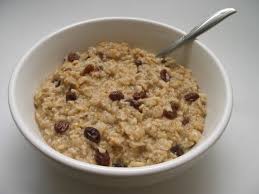
This morning right after she finished eating her oatmeal, and with the bowl still in front of her, my mother said, "I'm hungry, I'm starving".

Back during that difficult, very trying, first year, my mother would eat constantly. It was driving me crazy.

It honestly made me feel crazy and disconcerted.

Then one lucky day in the gym, I mentioned to two complete strangers how this was making me nuts. They had already gone the full round trip with Alzheimer's.

As I vented, they stood there listening, smile on their faces, head nodding up and down yes, and listened to me vent.

When I finished, they told me about their very similar experience(s). They gave me a great deal of encouragement. Even though I never saw them again, I think of them often.

They changed my life.

It was later that day that the little light bulb in my head went on.

I realized -- I am not alone. There are millions of people, just like me, going through the same experiences, day in, day out. Millions all over the world.

I thought about the smiles on the faces of the two people I met in the gym. The encouragement and positive feedback they offered. Their kindness.

I decided, right then and right there, to learn as much as I could about Alzheimer's.

I decided that I would do everything possible to get control of the crazy situation I found myself living, day in, day out.

I decided that sooner or later, I would become a happy caregiver.

I made it.

The Alzheimer's Reading Room is all about changing the lives of Alzheimer's caregivers. For the better.

At the end of the day, I want each and every person that comes here to know -- they are not alone.

I want them to know that Alzheimer's is a sinister disease that will try to ruin their life. But, it doesn't have to be that way.

I want them to know, if it is up to me, that is not going to happen.

The collective brain of the Alzheimer's Reading Room is growing each and every day.

Each person that makes a comment, shares their words of wisdom, or offers advice on this website lets another Alzheimer's caregiver know -- they are not alone.

One by one, we help each other turn on the little light bulb in our head.

I'm happy to be a part of it.

Gotta go, "I'm hungry, I'm starving".
For more Insight into Alzheimer's Disease
Subscribe to The Alzheimer's Reading Room

Bob DeMarco is an Alzheimer's caregiver and editor of the Alzheimer's Reading Room. The Alzheimer's Reading Room is the number one website on the Internet for insight into Alzheimer's disease. Bob taught at the University of Georgia, was an executive at Bear Stearns, the CEO of IP Group, and is a mentor. He has written more than 600 articles with more than 11,000 links on the Internet. Bob resides in Delray Beach, FL.


More from the Alzheimer's Reading Room


Follow the Alzheimer's Reading Room on Twitter

Side Effects of Alzheimer's and Dementia Drugs


There is a new study published in the journal, Archives of Internal Medicine that caught my attention.

The study showed that users of cholinesterase inhibitors like Aricept, Exelon and Reminyl are more likely to experience slower heart rates and a higher rate of feinting episodes.

In the case of my mother, her heart rate has slowed, and this disturbed me until I discused the issue with her personal care physician. He told me what to watch for and how to monitor the situation.

My mother is not feinting. However, I know other Alzheimer's caregivers that have experienced this problem, and as a result, live in a perpetual state of angst.

Feinting leads to frequent 9-1-1 calls, and also brings risk such as the dreaded broken hip. Feinting is certainly a cause for concern.

Most of us would conclude that feinting is caused by Alzheimer's and not a problem brought on by the drug (s). This new study highlights the potential side effects of cholinesterase inhibitors.

The scientists are not suggesting that Alzheimer's patients stop taking cholinesterase inhibitors, and neither am I.

However, if you are experiencing these problems you might want to discuss these issues with your personal care physician or a specialist.
"This study does not suggest that dementia patients shouldn't take these drugs," says Dr. Gill. "What's critical is that patients, caregivers and physicians be aware of the potential side effects, and weigh these risks carefully against the potential for beneficial effects."
To receive more information about Alzheimer's -- Subscribe to The Alzheimer's Reading Room

Dementia drugs may put some patients at risk, Queen’s study shows

Side effects associated with several commonly-prescribed dementia drugs may be putting elderly Canadians at risk, says Queen's University Geriatrics professor Sudeep Gill.

Cholinesterase inhibitors (Aricept, Exelon and Reminyl) are often prescribed for people with Alzheimer's disease and related dementias because they increase the level of a chemical in the brain that seems to help memory. Although such drugs are known to provoke slower heart rates and fainting episodes, the magnitude of these risks has not been clear until now.

"This is very troubling, because the drugs are marketed as helping to preserve memory and improve function," says Dr. Gill, who is an Ontario Ministry of Health and Long-term Care Career Scientist, working at Providence Care's St. Mary's of the Lake Hospital in Kingston. "But for a subset of people, the effect appears to be the exact opposite."

In a large study using province-wide data, Dr. Gill and his colleagues discovered that people who used cholinesterase inhibitors were hospitalized for fainting almost twice as often as people with dementia who did not receive these drugs. Experiencing a slowed heart-rate was 69 per cent more common amongst cholinesterase inhibitor users. In addition, people taking the dementia drugs had a 49 per cent increased chance of having permanent pacemakers implanted and an 18 per cent increased risk of hip fractures.

Unfortunately, Dr. Gill continues, this class of drugs is one of the few effective dementia treatments available today. Acknowledging that these drugs do have an important role in the management of dementia, he suggests that people who are already at a higher risk (for example, those who have had previous episodes of fainting or slowed heart rate) may want to ask their doctors to reassess the value of taking the drugs.

Slowing of the heart rate from cholinesterase inhibitors, if significant, may cause a person to faint and suffer fall-related injuries such as a broken hip - often debilitating and sometimes fatal for seniors. However, many physicians aren't aware of the connection between these problems and the dementia drugs, Dr. Gill notes.

If the association with dementia drugs is not identified, people who faint may be prescribed a permanent pacemaker: an invasive procedure that can involve serious complications for seniors. Both the injuries incurred from falling and the risks from pacemaker implants are "downstream consequences" of not recognizing this drug-induced phenomenon.

"This study does not suggest that dementia patients shouldn't take these drugs," says Dr. Gill. "What's critical is that patients, caregivers and physicians be aware of the potential side effects, and weigh these risks carefully against the potential for beneficial effects."

The findings are published in the journal, Archives of Internal Medicine. Scientists from the Institute for Clinical Evaluative Sciences, the University of Toronto and Harvard University are also on the research team.

The study uses data housed at the Institute for Clinical Evaluative Sciences (ICES). Ontario's first satellite unit of ICES was established at Queen's in 2007 to provide university researchers with electronic access to Ontario health datasets and population registries by secured and encrypted lines. Areas of focus at Queen's include cancer, pharmacological studies and dementia.

Contacts: Nancy Dorrance, 613.533.2869 nancy.dorrance@queensu.ca or Jeff Drake, 613.533.2877, jeff.drake@queensu.ca Queen's News and Media Services

Bob DeMarco is an Alzheimer's caregiver and editor of the Alzheimer's Reading Room. The Alzheimer's Reading Room is the number one website on the Internet for insight into Alzheimer's disease. Bob taught at the University of Georgia, was an executive at Bear Stearns, the CEO of IP Group, and is a mentor. He has written more than 600 articles with more than 11,000 links on the Internet. Bob resides in Delray Beach, FL.


More from the Alzheimer's Reading Room


Follow the Alzheimer's Reading Room on Twitter

Is it really Alzheimer's or something else


Many people assume that if an older person becomes forgetful and can no longer deal with some of the basic activities of daily living, he or she must have Alzheimer’s disease.

A sad case in point: My father’s internist diagnosed him with Alzheimer’s disease last year (my father was then 80) and prescribed medication that didn’t seem to help at all. It wasn’t until I took my father to a neurologist that we learned he actually had a benign brain tumor that was affecting his memory and behavior. With that as a backdrop, what are some other brain diseases that may be mistaken for Alzheimer’s?

I cannot tell you how many times I have recommended to someone to go beyond their personal physician and get a neurological consult. They rarely follow through which never stops amazing me.
Subscribe to The Alzheimer's Reading Room--via Email

Source Johns Hopkins Health Alert

Questions About Alzheimer's Disease

Dementia, the diminution of multiple cognitive abilities occurring in normal alertness, can be caused by numerous factors. These include space-occupying brain lesions (tumors, collections of blood called subdural hematomas, and abscesses); infection (meningitis, encephalitis, syphilis, to name a few); impaired cerebral spinal fluid flow causing normal pressure hydrocephalus; metabolic and endocrine abnormalities (too much or too little thyroid hormone or cortisol are examples); radiation to the brain; brain trauma; stroke; and medication side-effects. Severe depression can also cause dementia. This is why medical, neurologic, and psychiatric assessments are essential parts of the initial evaluation of dementia.

Bob DeMarco is a citizen journalist, blogger, and Caregiver. In addition to being an experienced writer he taught at the University of Georgia , was an Associate Director and Limited Partner at Bear Stearns, the CEO of IP Group, and is a mentor. Bob currently resides in Delray Beach, FL where he cares for his mother, Dorothy, who suffers from Alzheimer's disease. He has written more than 500 articles with more than 11,000 links to his work on the Internet. His content has been syndicated on Reuters, the Wall Street Journal, Fox News, Pluck, Blog Critics, and a growing list of newspaper websites. Bob is actively seeking syndication and writing assignments.


More from the Alzheimer's Reading Room
Original content the Alzheimer's Reading Room

  • A Simple Three Minute Test Can Detect the Earliest Stage of Alzheimer's Disease

  • Five Ways to Keep Alzheimer's Away

  • Ten Million Baby Boomers likely to suffer from Alzheimer’s during their lifetime

  • Living Alzheimer's From the Front Row

  • High cholesterol levels in your 40s raises Alzheimer's risk

  • Is Alzheimer's a type of diabetes of the brain?

  • Alzheimer's Disease Facts and Figures 2008

  • Is Mild Cognitive Impairment (MCI) an Early Stage of Alzheimer's

  • A Wonderful Moment in Time--Mom at the Banana Boat