Alzheimer's and Communication, Take a Few Deep Breaths


When my mother would say something mean, nonsensical or just downright crazy it would bring up emotions like anger in me immediately. Imagine a person being very mean to you and how you might feel. Since I was raised in a feisty Italian-American family it was not unusual for my “temper” to flair.


Alzheimer' and Communication, Take a Few Deep Breaths

When I moved to Delray Beach, Florida to take care of my mother one of my most difficult problems was learning how to communicate with her. If you have cared for a person suffering from Alzheimer’s or dementia you know how difficult this can be.

When my mother would say something mean, nonsensical or just downright crazy it would bring up emotions like anger in me immediately. Imagine a person being very mean to you and how you might feel. Since I was raised in a feisty Italian-American family it was not unusual for my “temper” to flair. If I reacted the way I had in the past my mother would either get “meaner”, or she would go into her room and stay there for hours on end often refusing to speak. I would end up with a pain in my stomach and a range of feelings that included a sense of hopelessness. I realized during those first days that I needed learn how to deal effectively with this new, unfamiliar, communication with my mother.

The first thing I decided to do was work very hard to learn a new set of skills when these situations occurred. I learned to label (identify) and accept my initial reaction. What was I feeling: anger, frustration, confusion, sadness or a combination of all of these feelings? I found that by identifying my feelings I could corral and contain them so I could deal effectively with my mother and the situation at hand. Once I had my mother settled I would go into a separate room and let my feeling come to the surface. First identify, second feel and third dismiss these feeling as part of the sometimes craziness called Alzheimer’s disease. I know my mother didn’t mean what she was saying and I knew from my previous 50 years with her that she would never say or do the things she was doing if she could help it.

As I was learning, I read an article about taking a “few deep breaths”. I tried it. Before I knew it, I was able to use this technique to blow away all the bad feelings and find myself relieved. I also learned to take a few deep breaths once the communication episode with my mother was starting. This really helped put me in focus and remind myself about what needed to be accomplished.

So my advice to you is to learn how to take a few deep breaths. Nice and slow deeper and deeper breaths. It works.

I learned to accept my initial reaction to these situations as part of being human. In other words, I came to understand that it was OK to have my feelings, my emotions. I also learned that I needed to keep these feelings in check and find a way to diffuse the anger within me. I came to understand that my mother was now evidencing behavior that was a result of her own confusion and the deterioration taking place in her brain. I came to accept the Alzheimer’s disease for what it is—something mean and sinister that was not going to go away. I learned to take control of the situation at hand.

You can do it too, I know you can.


Day Care for older dementia patients: favorable effects on behavioral and psychological symptoms and caregiver stress


This is a clip of a research study.

The conclusions are important and indicate that day care can be effective in reducing behavioral and psychological symptoms of dementia patients. Also alleviates caregiver burden.

My own experience shows that social interaction does have a very positive effect on my mother and her behavior.

Objective
To assess the effects of Day Care (DC) on older subjects with dementia and their caregivers.

Methods
Thirty patients with dementia, consecutively admitted to a DC, were compared with 30 patients, matched for age and cognitive function, who received usual home care (HC).
Results
After adjusting for potential confounders, NPI score significantly decreased in DC group, with a reduction of psychotropic drugs prescription, whereas it increased in HC. No significant between-group difference was observed for cognitive and functional change. CBI significantly decreased in DC, but not HC, caregivers, with no significant between-group difference in depressive symptoms change.
Conclusions
A 2-month period of DC assistance is effective in reducing behavioral and psychological symptoms of dementia patients and in alleviating caregivers' burden. Copyright © 2008 John Wiley & Sons, Ltd.
 blog it

Health Tip: Keeping the Caregiver Healthy


Eating healthy and exercise are of paramount importance.
clipped from www.medicinenet.com

Caregiving is one of the toughest jobs around. It is both emotionally and physically draining.

The American Heart Association offers these suggestions for those who assist others to help them feel energized, refreshed and happy:

  • Make exercise a regular part of your life, even if it's just a quick walk a few times a day.
  • Eat healthy meals and snacks — whole grains, lean meats, fruits and vegetables — anything that's good for your heart can help ward off depression.
  • Every day, take a few minutes to do something that makes you happy or allows you to relax — listening to music, reading, taking a hot bath, or anything you enjoy.
  • Laugh as much as you can.
  • Take some time for yourself to get away each week, even if only for an hour or so.
  • Look for signs of depression, and treat them promptly.
  • Stay organized and on top of projects to keep from feeling overwhelmed.

— Diana Kohnle

 blog it

Alzheimer's Caregivers


I recently received my copy of Alzheimer's Caregivers . This free handbook and tip sheet is well worth obtaining. You can get up to three free copies so its also easy to share. Get your free copy.


If you obtain the handbook, please let me know your reaction. Feel free to email this post to your friends and relatives.


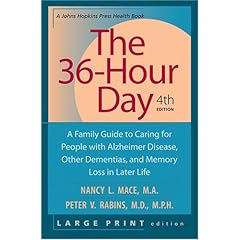
The 36-Hour Day: A Family Guide to Caring for People with Alzheimer Disease and Memory Loss in Later Life

Wii Fit


This is an excellent article about the new fitness module for Wii. I am considering getting this for my mother who suffers from Alzheimer's. Along with this I hope to get friends to come over and bowl with her.

This would satisfy two important needs: exercise and social interaction. Follow the link to read the article.

I'll let you know.
clipped from www.nytimes.com
Exercising with Wii Fit is like having a Bob Harper or a Denise Austin who talks back — gently cajoling you through exercises, praising, nudging, even reminding you to eat a banana once in a while. It also lets you see how you stack up against friends or family members; each user creates a cartoony avatar called a “Mii.”

The Caring Today Contest


"The Caring Today contest is a way for caregivers to get the word out about their experiences," said Strecker Richard. "We are honored to provide family caregivers a chance to be heard and to support these dedicated, under-recognized heroes. We're excited that Home Instead Senior Care is offering $16,000 worth of relief to the people who really need it."
 blog it

Retail Clinic Closures ‘Not Unlike the Dot Com Bubble’


clipped from blogs.wsj.com

Retail clinics are hitting some tough realities as they move past the era of hype.

Like the Internet, the clinics aren’t going away. But an initial wave of enthusiasm does seem to be passing, as some clinics go bust and others scale back expansion plans, the WSJ reports.
 blog it

Alzheimer's Question 2 -- Is it Alzheimer's or something else?


Q. Many people assume that if an older person becomes forgetful and can no longer deal with some of the basic activities of daily living, he or she must have Alzheimer’s disease. A sad case in point: My father’s internist diagnosed him with Alzheimer’s disease last year (my father was then 80) and prescribed medication that didn’t seem to help at all. It wasn’t until I took my father to a neurologist that we learned he actually had a benign brain tumor that was affecting his memory and behavior. With that as a backdrop, what are some other brain diseases that may be mistaken for Alzheimer’s?

Also see Most Early-Onset Dementia Not Alzheimer's and Eight Types of Dementia Defined

Source Johns Hopkins Health Alert

Questions About Alzheimer's Disease

A. Dementia, the diminution of multiple cognitive abilities occurring in normal alertness, can be caused by numerous factors. These include space-occupying brain lesions (tumors, collections of blood called subdural hematomas, and abscesses); infection (meningitis, encephalitis, syphilis, to name a few); impaired cerebral spinal fluid flow causing normal pressure hydrocephalus; metabolic and endocrine abnormalities (too much or too little thyroid hormone or cortisol are examples); radiation to the brain; brain trauma; stroke; and medication side-effects. Severe depression can also cause dementia. This is why medical, neurologic, and psychiatric assessments are essential parts of the initial evaluation of dementia.


Alzheimer's Question 1 – Where can I get the best medical evaluation for my wife?


Q. My wife’s doctor thinks she may have an early form of Alzheimer’s disease. It’s been a week since he gave us that devastating news, but I now feel able to gather my wits and do whatever I can to help get her the best care. We are retired, 78 years old, and able to travel to any center that is recommended. What medical specialists should we seek out for a more extensive evaluation and/or care?

Also see Most Early-Onset Dementia Not Alzheimer's and Eight Types of Dementia Defined

Source Johns Hopkins Health Alert

Questions About Alzheimer's Disease

A. Your wife’s primary care physician might be the best person to oversee her care. If you would like to see a specialist in Alzheimer’s disease or would like to participate in research, you should contact the nearest Alzheimer's Disease Research Center or ask your internist if there is a specialist in your community who is particularly knowledgeable about Alzheimer’s disease. Even if you do pursue another opinion or participate in research, you should keep her primary physician informed. In the end, her internist’s care will be crucial to her well being.

Is it Alzheimer's or something else?

Q. Many people assume that if an older person becomes forgetful and can no longer deal with some of the basic activities of daily living, he or she must have Alzheimer’s disease. A sad case in point: My father’s internist diagnosed him with Alzheimer’s disease last year (my father was then 80) and prescribed medication that didn’t seem to help at all. It wasn’t until I took my father to a neurologist that we learned he actually had a benign brain tumor that was affecting his memory and behavior. With that as a backdrop, what are some other brain diseases that may be mistaken for Alzheimer’s? Santa Fe, NM

A. Dementia, the diminution of multiple cognitive abilities occurring in normal alertness, can be caused by numerous factors. These include space-occupying brain lesions (tumors, collections of blood called subdural hematomas, and abscesses); infection (meningitis, encephalitis, syphilis, to name a few); impaired cerebral spinal fluid flow causing normal pressure hydrocephalus; metabolic and endocrine abnormalities (too much or too little thyroid hormone or cortisol are examples); radiation to the brain; brain trauma; stroke; and medication side-effects. Severe depression can also cause dementia. This is why medical, neurologic, and psychiatric assessments are essential parts of the initial evaluation of dementia.


Rehabiltation Therapy Causes Increase in Gray Matter


Might benefit those predisposed to Alzheimer's via genetics.
clipped from www.newswise.com
Edward Taub, Ph.D., a UAB neuroscientist and developer of
Constraint-Induced (CI) therapy, and Lynne Gauthier, a graduate student
at UAB, discuss findings showing that CI therapy produces an increase in
the gray matter of the brain of stroke patients who undergo the therapy.
This is the first representation that a rehabilitation therapy can
produce structural changes within the human brain after injury. It is
also further proof of neuroplasticity, the brain's ability to remodel
itself following traumatic injury.
(03:53)
A rehabilitation therapy developed by a UAB neuroscientist produces changes in the structure of the brain, the first evidence of actual brain remodeling resulting from a rehabilitation therapy. In findings presented online in Stroke, sophisticated analysis of MRI images of stroke patients showed that Constraint Induced (CI) therapy produced a significant increase in the amount of gray matter present in the brains of patients receiving the therapy.
 blog it

Health Implications of Family Caregiving


Follow the link for additional information. Sponsored by the National Institute for Health this looks like it could be very informative and of great value to caregivers. This is only a short list of the topics being covered.
clipped from videocast.nih.gov
View event:
You will be able to view the event at
http://videocast.nih.gov when the
event is live.
Air date:
Wednesday, June 25, 2008, 1:00:00 PM
Caring for a loved one?
Overview of the issue of health and caregivers
Overview of research of health and caregivers
Male caregiver’s experience
Powerful Tools for Caregivers
Veterans Affairs efforts to support family caregivers

Sponsors: Centers for Medicare & Medicaid Services and the Department of Health and Human Services New Freedom Initiative Subcommittee on Caregiving

Efficacy and safety of tarenflurbil in mild to moderate Alzheimer's disease: a randomised phase II trial


800 mg tarenflurbil twice per day was well tolerated for up to 24 months of treatment, with evidence of a dose-related effect on measures of daily activities and global function in patients with mild AD.
We will try to keep you posted when the Phase 3 trial begins. Feel free to subscribe to our email list if you would like to be notified.
Receive Notification via Email